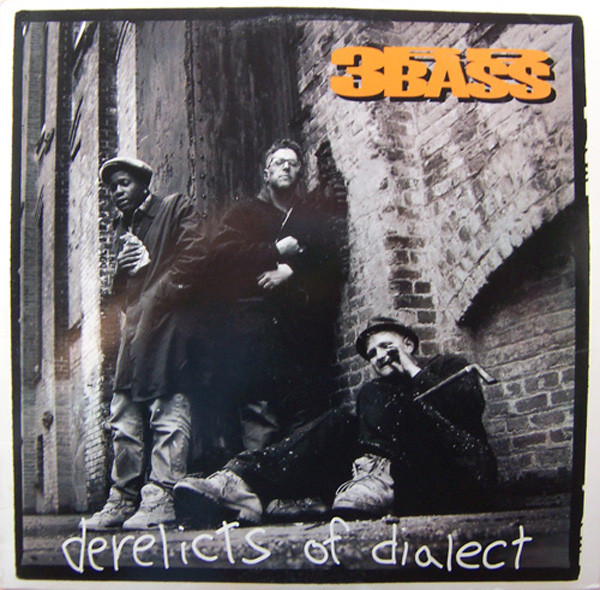
Derelicts Of Dialect
 View on Discogs
Album Summary
Derelicts of Dialect is the second studio album from New York City rap duo 3rd Bass — MC Serch and Pete Nice — released in 1991 on the storied Def Jam Recordings. A dense, sprawling double LP, the album was crafted under the guidance of producers including DJ Premier and the duo themselves, arriving at a moment when East Coast hip-hop was reaching the height of its golden age sophistication. This record found 3rd Bass pushing deeper into the lyrical underground, trading in razor-sharp wordplay, jazz-inflected sample beds, and a defiant rejection of rap's mainstream commercialization — a statement as much as it was an album, dropped into the culture with the weight of something that knew exactly what it was.
Reception
- The album received widespread critical acclaim from hip-hop publications upon its release, celebrated for its lyrical density and adventurous production at a time when the genre was at its artistic peak.
- Despite its critical standing, the album achieved only moderate commercial performance relative to the mainstream rap market of the era.
- It is broadly regarded by hip-hop historians and critics as a touchstone of early 1990s underground East Coast rap, its reputation growing considerably in the decades since its release.
Significance
- Derelicts of Dialect stood as a powerful testament to the East Coast underground's core values — intricate wordplay, sample-heavy construction, and unflinching cultural commentary — delivered across a massive double-LP canvas that rewarded careful listening.
- Released during the golden age of hip-hop, the album reinforced the artistic credibility of the era and demonstrated that rap music could operate as serious, layered artistic expression rather than a vehicle for commercial ambition.
- The record helped cement DJ Premier's emerging production signature and showcased 3rd Bass as among the most technically gifted lyricists of their generation, contributing to the blueprint that underground and alternative hip-hop would build upon throughout the decade.
Samples
- Pop Goes The Weasel — one of the most recognized tracks from the album, with a notable sampling legacy within subsequent hip-hop productions.
Tracklist
-
A1 The Merchant Of Grooves 112
 1:36
1:36
-
A2 Derelicts Of Dialect 96
4:08
-
A3 Ace In The Hole 102
3:39
-
A4 French Toast 137
0:49
-
A5 Portrait Of The Artist As A Hood 106
4:30
-
B1 Pop Goes The Weasel 100
3:54
-
B2 Sea Vessel Soliloquy 119
0:40
-
B3 Daddy Rich In The Land Of 1210 106
3:13
-
B4 Word To The Third 114
5:02
-
B5 Herbalz In Your Mouth 93
4:17
-
B6 Al'z A-B-Cee'z —
1:52
-
C1 No Master Plan No Master Race 93
4:47
-
C2 Come In 97
3:07
-
C3 No Static At All 119
3:41
-
C4 Eye Jammie 86
1:05
-
C5 Check Yourself —
2:59
-
D1 Microphone Techniques 103
4:57
-
D2 Problem Child 97
4:28
-
D3 3 Strikes 5000 104
3:59
-
D4 Kick Em In The Grill —
2:36
-
D5 Green Eggs And Swine 95
4:45
-
D6 M.C. Disagree And The Re-Animator —
0:49

Artist Details
Now let me tell you something about 3rd Bass — this New York City hip-hop trio, made up of MC Serch, Pete Nice, and DJ Richie Rich, came together in the late 1980s and burst onto the scene with their debut album *The Cactus Album* in 1989, blending sharp, intellectual lyricism with hard-hitting beats that earned them serious respect in a genre that didn't always welcome outsiders. What made these cats truly remarkable was that MC Serch and Pete Nice, two white MCs, managed to earn genuine credibility in hip-hop not by mimicking the culture but by deeply understanding and honoring it, making them a fascinating and important chapter in the story of rap's expanding reach. Their beef with Vanilla Ice and their unapologetic authenticity helped define conversations about cultural ownership in hip-hop that are still being had today, cementing 3rd Bass as more than just a footnote — they were a statement.