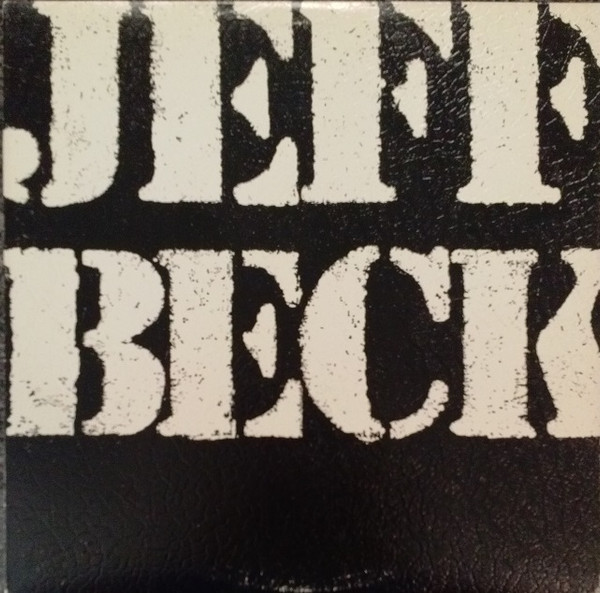
There & Back
 View on Discogs
 View on Wikipedia
Album Summary
There & Back came rolling out of the studios in 1980 on Epic Records, and baby, it was worth the wait. Jeff Beck had stepped away from the recording scene for a spell, and when he came back, he came back right — teaming up with none other than George Martin, the man who helped sculpt the sound of the Beatles, to co-produce this gem. That pairing alone was enough to make any serious music lover sit up straight. Martin brought his signature polish and architectural sensibility to the project, giving Beck's volcanic, fusion-drenched guitar work a refined framework without ever filing down its edges. The result was something rare — an instrumental album that felt both sophisticated and urgent, a record that honored the jazz-fusion fire Beck had been stoking through the seventies while pointing his sound toward a new decade with confidence and grace.
Reception
- There & Back climbed to number 19 on the Billboard 200, making it one of the most commercially successful albums of Beck's career and proving that instrumental guitar music could still move units in the new wave era.
- Critics welcomed the album warmly, praising the balance between Beck's ferocious technical command and the melodic accessibility that Martin's production brought to the table — a combination that satisfied fusion devotees and casual listeners alike.
- The album earned Beck renewed visibility on mainstream radio and in the press, cementing his reputation as a guitarist's guitarist who refused to be boxed in by genre or trend.
Significance
- There & Back stands as a landmark moment in jazz fusion's evolution, demonstrating how the genre could absorb the cleaner, more polished production values of the early eighties without losing its soul or its fire.
- The album made a quiet but powerful statement about the staying power of instrumental music at a time when the pop landscape was being reshaped by synthesizers and new wave — Beck and his band held the line with virtuosity and vision.
- The collaboration between Beck and George Martin was historically significant in its own right, bridging the world of rock production royalty with the cutting edge of fusion guitar, and the influence of that pairing can be heard in how subsequent instrumental artists approached the challenge of crafting albums with both depth and broad appeal.
Tracklist
-
A1 Star Cycle 116
 4:56
4:56
-
A2 Too Much To Lose 103
2:57
-
A3 You Never Know 104
4:03
-
A4 The Pump 87
5:45
-
B1 El Becko 77
3:59
-
B2 The Golden Road 78
4:54
-
B3 Space Boogie 133
5:04
-
B4 The Final Peace 167
3:36

Artist Details
Jeff Beck was one of the baddest guitar slingers to ever walk the earth, a British virtuoso who first burst onto the scene out of Surrey, England in the mid-1960s, cutting his teeth with The Yardbirds before launching his own Jeff Beck Group in 1967 and pioneering a raw, explosive blend of blues-rock, jazz fusion, and hard rock that made every other guitarist sit down and take notes. His tone was unlike anything coming out of the speakers in those days — liquid, fierce, and deeply emotional — and his landmark albums like Truth and Blow by Blow proved that the electric guitar was an instrument without limits, earning him a place alongside Clapton and Page in the holy trinity of British rock guitar. Beck's restless genius kept him relevant across decades, constantly reinventing his sound and inspiring generations of musicians who knew that if they wanted to understand what a guitar could truly say, they had to go to school on Jeff Beck.