Bookends
 View on Discogs
 View on Wikipedia
Album Summary
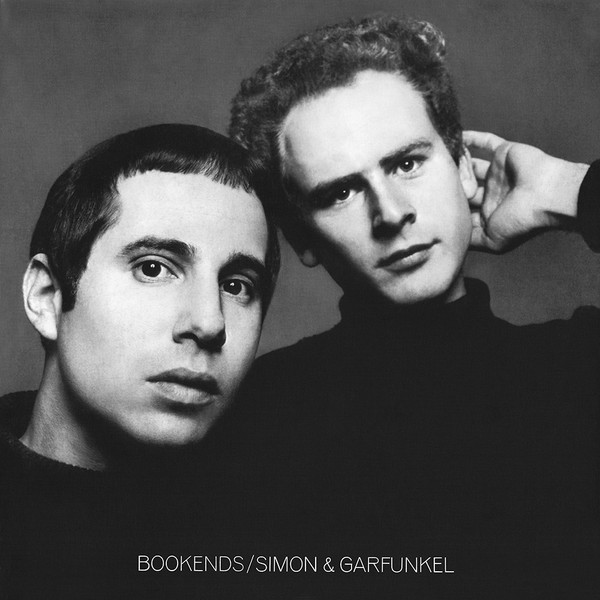
Bookends came to life inside the hallowed rooms of Columbia Records studios, shaped by the masterful hands of producers Roy Halee and the duo themselves — Paul Simon and Art Garfunkel, two young men from Queens who were rewriting the rules of what popular music could say and feel. Released in April of 1968, this was their fourth studio album, arriving at the absolute peak of their commercial and artistic powers, dropping into a world that was restless, searching, and hungry for exactly the kind of truth these two were telling. The album unfolded like a two-sided meditation — Side A a thematically unified suite about the arc of human life, Side B a collection of singles and deeper cuts that showed just how wide their creative range had grown. It was a record that felt like it knew something the rest of the charts didn't.
Reception
- Bookends debuted at number one on the Billboard 200 and held that top position for an extraordinary stretch, affirming Simon & Garfunkel as one of the dominant forces in late-1960s popular music.
- The album was certified triple platinum in the United States, with the powerhouse single 'Mrs. Robinson' climbing to number one on the Billboard Hot 100 and becoming one of the defining songs of 1968.
- The album earned the Grammy Award for Best Engineered Album, a testament to Roy Halee's immaculate sonic craftsmanship, and received a nomination for Album of the Year.
Significance
- Bookends stood as one of the first true concept albums in mainstream pop, with Side A tracing the full journey of a human life — from youth through old age — with a depth and emotional intelligence that most artists never touched in an entire career.
- The album embodied the sophisticated pop-rock spirit of the late 1960s, weaving introspective, literary lyrics together with lush orchestral arrangements in a way that bridged the gap between the counterculture and the mainstream without compromising either.
- Bookends captured the generational anxiety and longing of 1968 with uncommon grace — tracks like 'America' and 'Old Friends' gave voice to a searching, uncertain America in a way that felt both deeply personal and universally resonant, cementing the album as a cultural document of its era.
Samples
- "Mrs. Robinson" — one of the most recognizable songs of the rock era, it has been sampled and interpolated across multiple genres, with perhaps its most widely heard recontextualization being Frank Sinatra's cover version and its enduring presence in hip-hop and pop productions over the decades.
- "A Hazy Shade Of Winter" — the propulsive, driving energy of this track has made it a source of samples and interpolations across hip-hop and electronic music productions.
- "America" — the song's melodic and lyrical themes have been sampled and interpolated by various artists, most notably Wyclef Jean, who built upon its imagery and feel.
Tracklist
-
A1 Bookends Theme (Instrumental) —
 0:32
0:32
-
A2 Save The Life Of My Child 128
2:49
-
A3 America 89
3:35
-
A4 Overs 79
2:14
-
A5 Voices Of Old People 60
2:07
-
A6 Old Friends 152
2:36
-
A7 Bookends Theme 137
1:16
-
B1 Fakin' It 101
3:17
-
B2 Punky's Dilemma 129
2:12
-
B3 Mrs. Robinson 92
4:02
-
B4 A Hazy Shade Of Winter 142
2:17
-
B5 At The Zoo 84
2:23

Artist Details
Simon & Garfunkel — that's Paul Simon and Art Garfunkel, baby — came together in the early 1960s right out of Queens, New York, weaving folk, pop, and a little rock and roll into some of the most achingly beautiful harmonies this world has ever heard, giving us timeless masterpieces like "The Sound of Silence," "Mrs. Robinson," and "Bridge Over Troubled Water" that spoke straight to the soul of a generation wrestling with war, change, and the search for meaning. These two cats became the soundtrack of the 1960s counterculture movement, their music threading through the threads of social unrest, love, and longing in ways that made them not just musicians, but poets of their time. Even after they went their separate ways in 1970, their legacy never faded — because when the music is that real, that honest, it just doesn't die.