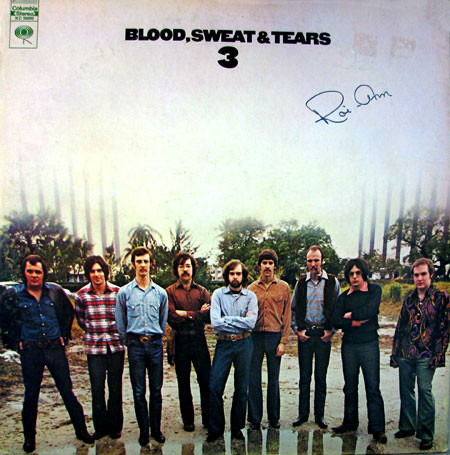
Blood, Sweat And Tears 3
 View on Discogs
Album Summary
Blood, Sweat & Tears 3 came to life in 1970, born out of the white-hot momentum of a band riding one of the most spectacular commercial waves in rock history. Released on Columbia Records and produced by the band themselves alongside the seasoned James William Guercio, this third album arrived fast and furious on the heels of their self-titled breakthrough, proof that this extraordinary ensemble of jazz-trained cats and rock-hardened warriors was not slowing down for anybody. With David Clayton-Thomas at the helm and that magnificent brass-and-rhythm machine locked and loaded, the sessions captured a group operating at peak confidence — a band that knew exactly who they were and wasn't afraid to let the whole world hear it.
Reception
- The album reached number one on the Billboard 200, affirming that Blood, Sweat & Tears had not merely stumbled into success but had planted a flag at the very top of the American music landscape.
- The single 'Lucretia Mac Evil' became a top 40 hit, delivering the band another dose of radio gold and showcasing their gift for wrapping genuine musical sophistication inside an irresistibly hooky groove.
- Critical response was warm, with reviewers recognizing the album as a confident and cohesive continuation of the jazz-rock fusion sound the band had helped define, even as some noted it treaded familiar creative ground.
Significance
- Blood, Sweat & Tears 3 stands as a monument to the early 1970s jazz-rock fusion movement, a record that proved sophisticated brass arrangements, complex harmonic structures, and hard-driving rock energy could not only coexist but absolutely ignite each other.
- David Clayton-Thomas delivered some of his most commanding vocal performances across these tracks, from the swaggering funk of 'Lucretia Mac Evil' to the aching tenderness of the James Taylor cover 'Fire And Rain,' revealing the full emotional range of a singular front man.
- The album demonstrated with authority that experimental, jazz-influenced rock could conquer the mainstream charts without diluting its artistic ambitions, laying groundwork for every brass-fronted rock act that dared to follow.
Samples
- "Lucretia Mac Evil" — one of the most recognizable tracks in the Blood, Sweat & Tears catalog to appear in hip-hop and electronic music sampling circles, drawn upon for its infectious funk-driven brass groove and Clayton-Thomas's commanding vocal swagger.
Tracklist
-
A1 Hi-De-Ho —
 4:25
4:25
-
A2 The Battle —
2:41
-
A3 Lucretia Mac Evil —
3:00
-
A4 Lucretia's Reprise —
2:31
-
A5 Fire And Rain —
4:01
-
A6 Lonesome Suzie —
4:35
-
B2 He's A Runner —
4:13
-
B3 Somethin' Comin' On —
4:33
-
B4 40,000 Headmen —
4:44

Artist Details
Blood, Sweat & Tears burst onto the scene out of New York City in 1967, bringing with them a sound so rich and layered it made your soul stand at attention — a glorious fusion of jazz, rock, blues, and full brass-section arrangements that nobody had quite heard before. Led by the powerhouse vocals of David Clayton-Thomas, they helped pioneer the jazz-rock genre alongside Chicago and proved that a horn section belonged right there in the heart of rock and roll, earning them Grammy Awards and chart-topping hits like "Spinning Wheel" and "You've Made Me So Very Happy." Their cultural significance runs deep, as they represented a moment when musicians refused to be boxed in, expanding the sonic palette of an entire generation and leaving a brass-kissed fingerprint on the sound of the late '60s and early '70s that still resonates today.