Chicago VII
 View on Discogs
 View on Wikipedia
Album Summary
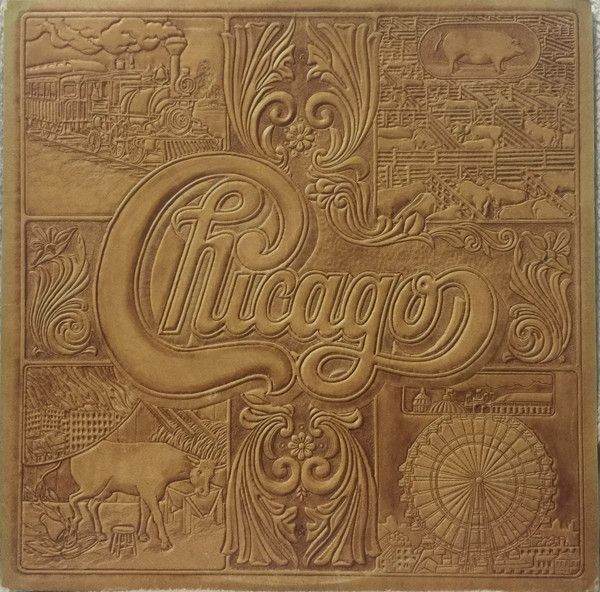
Chicago VII came roaring out in March of 1974 on Columbia Records, a double album of ambition and swagger from a band that refused to be put in any one box. Produced by the legendary James William Guercio — the man who understood Chicago's DNA like nobody else — this record was laid down with the full weight of a band at the peak of their powers, balancing their jazz-rooted instrumental instincts against a growing taste for smooth, radio-ready soul and pop. The double-LP format gave the group room to stretch out, breathe, and show every dimension of what they could do, from sweeping orchestral passages to hard-driving funk grooves, and Guercio's production kept the whole thing feeling cohesive even when the band was pushing in five different directions at once.
Reception
- Chicago VII was a commercial triumph, reaching the top of the Billboard 200 albums chart and confirming that the band's audience was as devoted as ever heading into the mid-seventies.
- "Wishing You Were Here" and "Call On Me" both performed strongly as singles, with "Wishing You Were Here" becoming a genuine Top 20 hit and a fan favorite that showcased the band's softer, more vulnerable side.
- Critics at the time were divided — some celebrated the album's ambition and musical range, while others felt the double-LP sprawl occasionally worked against the band's tightest instincts — but the buying public made their feelings clear by sending it to the top of the charts.
Significance
- Chicago VII stands as a testament to the band's rare ability to hold jazz, rock, pop, and soul in equal tension — tracks like "Aire" and "Mongonucleosis" demonstrated that a rock band could still honor serious instrumental craftsmanship in an era when that was becoming an increasingly rare thing.
- The album captured Chicago at a transitional cultural moment, when brass-driven rock was beginning to give way to softer sounds, and the presence of both the lush ballad "Wishing You Were Here" and the funky swagger of "Italian From New York" on the same record showed a band consciously straddling that fault line with style.
- "(I've Been) Searchin' So Long" became one of the defining deep cuts of Chicago's catalog, a soulful, searching piece that resonated with listeners who connected deeply with its emotional honesty and the band's unshowy but masterful musicianship.
Samples
- "Wishing You Were Here" — sampled by various artists drawn to its lush string arrangement and emotional vocal performance, making it one of the more revisited moments from this album in later decades.
Tracklist
-
A1 Prelude To Aire 105
 2:47
2:47
-
A2 Aire 170
6:27
-
A3 Devil's Sweet 97
10:07
-
B1 Italian From New York 117
4:14
-
B2 Hanky Panky 114
1:53
-
B3 Life Saver 105
5:18
-
B4 Happy Man 108
3:34
-
C1 (I've Been) Searchin' So Long 171
4:29
-
C2 Mongonucleosis 133
3:26
-
C3 Song Of The Evergreens 135
5:20
-
C4 Byblos 127
6:18
-
D1 Wishing You Were Here 136
4:37
-
D2 Call On Me 130
4:02
-
D3 Woman Don't Want To Love Me 94
4:35
-
D4 Skinny Boy 159
5:12

Artist Details
Chicago is an American rock band that formed in Chicago, Illinois, in 1967, originally under the name The Chicago Transit Authority before shortening it to Chicago in 1969. The group pioneered a genre often described as rock and roll with horns, blending the raw energy of rock with the sophistication of jazz and classical influences, featuring a distinctive brass section comprising trumpets, trombones, and saxophones alongside a traditional rock lineup. They became one of the best-selling musical acts of all time, with a string of hit singles and albums throughout the 1970s and 1980s including If You Leave Me Now, Hard to Say I'm Sorry, and 25 or 6 to 4, earning numerous Grammy Awards and selling over 100 million records worldwide. Chicago played a pivotal role in establishing the brass rock subgenre and influenced countless artists by demonstrating that orchestral and jazz instrumentation could thrive in a mainstream rock context. Their longevity, spanning more than five decades of continuous performance and recording, cemented their status as one of the most enduring and commercially successful bands in American music history, leading to their induction into the Rock and Roll Hall of Fame in 2016.