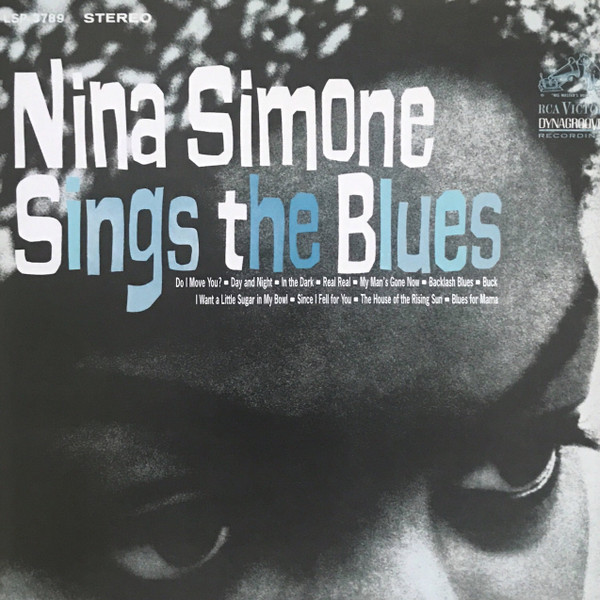
Nina Simone Sings The Blues
 View on Discogs
 View on Wikipedia
Album Summary
Nina Simone Sings The Blues arrived in 1967 on RCA Victor, and baby, it hit like a thunderclap on a clear summer night. Produced by Danny Davis, the album found Nina at a crossroads — a classically trained pianist and genre-bending visionary who stepped deliberately and powerfully into the heart of the traditional blues form. These sessions captured her during one of the most politically charged seasons of her life, when the civil rights movement was shaking the foundation of America, and the blues gave her exactly the kind of raw, unfiltered emotional vessel her spirit demanded. The backing band was tight and soulful, the 12-bar structures were honored and then bent to her will, and through it all, Nina's thunderous piano touch and that voice — that singular, irreplaceable voice — made every note feel like it had been lived, not just performed.
Reception
- The album was warmly embraced by critics who recognized that Nina Simone didn't simply visit the blues — she moved in, rearranged the furniture, and made it entirely her own, earning praise for the authenticity and emotional ferocity she brought to the tradition.
- While it was not a mainstream crossover smash, the album performed solidly within R&B and jazz markets, reinforcing Nina's standing as one of the most commanding and serious interpreters of American roots music in her generation.
- Tracks like 'I Want A Little Sugar In My Bowl' were singled out for their irresistible sensuality and deep blues credibility, with critics marveling at how Nina could be simultaneously earthy and exquisitely refined in the same breath.
Significance
- At a moment when the civil rights movement was rewriting the soul of America, this album stands as a profound act of cultural reclamation — Nina reaching back into the deepest roots of African American musical heritage and declaring, with absolute authority, that this music was hers and her people's.
- By bringing the full weight of her classical technique and jazz sophistication to the blues idiom, Nina helped dissolve the artificial walls between highbrow and vernacular American music, pointing the way for generations of artists who refused to be boxed into a single tradition.
- The album endures as one of the most honest and fearless documents of Nina Simone's artistry — proof that she could take any form, any tradition, and fill it so completely with her own truth that it became something that could only ever have come from her.
Samples
- Do I Move You? — sampled by numerous hip-hop and soul producers drawn to its raw groove and Nina's commanding vocal hook, making it one of the more frequently revisited cuts from this album in sample-based music.
- I Want A Little Sugar In My Bowl — one of the most recognized tracks from this album in sampling culture, its sensual blues feel has attracted producers across soul, hip-hop, and R&B over the decades.
Tracklist
-
A1 Do I Move You? 162
 2:41
2:41
-
A2 Day And Night 121
2:34
-
A3 In The Dark 73
2:53
-
A4 Real Real 80
2:17
-
A5 My Man's Gone Now 85
4:13
-
A6 Backlash Blues 115
2:14
-
B1 I Want A Little Sugar In My Bowl 98
2:27
-
B2 Buck 176
2:00
-
B3 Since I Fell For You 102
2:44
-
B4 The House Of The Rising Sun 136
3:55
-
B5 Blues For Mama 182
3:52

Artist Details
Nina Simone, born Eunice Kathleen Waymon in Tryon, North Carolina in 1933, was a classically trained pianist and vocalist who blended jazz, blues, gospel, folk, and classical music into something so deeply her own that no single genre could ever hope to hold her. She rose to prominence in the late 1950s and went on to become not just a towering figure in music, but a fierce and unapologetic voice of the Civil Rights Movement, with songs like "Mississippi Goddam" and "To Be Young, Gifted and Black" cutting straight to the heart of a nation's conscience. Nina Simone wasn't just making records — she was making history, and every note she played carried the weight of a people's struggle and the grace of a true artist who refused to be anything less than free.