
It Crawled Into My Hand, Honest
 View on Discogs
Album Summary
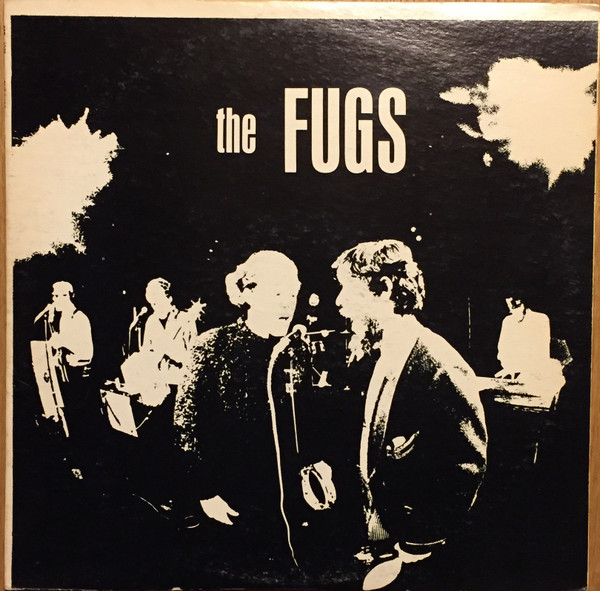
Back in 1968, when the whole country felt like it was coming apart at the seams, Ed Sanders and Tuli Kupferberg and the rest of the Fugs went into the studio and laid down something that could only have been born in that particular moment of fire and fury. Released on Reprise Records, 'It Crawled Into My Hand, Honest' came to life during one of the most turbulent years in American history — Vietnam burning, cities burning, the whole dream cracking wide open — and the Fugs met that moment not with polished protest songs but with a gloriously unhinged carnival of spoken word, noise collage, surrealist humor, and raw rock and roll that sounded like nothing else on the radio. Produced with a deliberately rough and restless spirit that matched the chaos outside the studio walls, the album captured Sanders, Kupferberg, and their rotating cast of Lower East Side poets and provocateurs at a moment of fierce creative energy and political urgency, and it would stand as one of the final statements before the group went on hiatus, a last mad dispatch from the front lines of the American counterculture.
Reception
- The album found no footing on the mainstream charts, which surprised absolutely nobody, because the Fugs were never chasing the pop audience — they were chasing something wilder and more necessary, and the Billboard crowd was not ready for that conversation.
- Among the underground press and counterculture publications that understood what the Fugs were doing, the record was received with genuine appreciation, recognized as a fearless and uncompromising document of radical artistic and political dissent at a moment when that dissent felt like a matter of survival.
- Some critics noted the album's deliberately uneven and sprawling character as both its greatest strength and its most challenging quality, a reflection of a band that valued provocation and ambition over the kind of careful sequencing that made records easy to digest.
Significance
- 'It Crawled Into My Hand, Honest' stands as one of the most vivid and unfiltered artifacts of late-1960s American radical counterculture, weaving anti-Vietnam War fury together with surrealist poetry and avant-garde noise in a way that pointed a long crooked finger straight at the confrontational spirit punk rock would later claim as its own.
- The record's bold deployment of sound collage, spoken word performance, and experimental studio textures placed the Fugs squarely within the emerging tradition of avant-garde concept-oriented rock, a tradition that valued ideas and provocation as much as melody and groove.
- By treating the rock record as a legitimate vessel for explicit literary dissent and radical political thought — drawing on the Beat poetry lineage that Sanders and Kupferberg carried in their bones — the Fugs helped carve out a space in American music history that would never quite be filled by anyone else the same way.
Tracklist
-
A1 Crystal Liaison —
 3:07
3:07
-
A2 Ramses II Is Dead, My Love 121
2:45
-
A3 Burial Waltz 74
2:24
-
A4 Wide Wide River 99
2:47
-
A5 Life Is Strange 155
2:32
-
B1 Johnny Pissoff Meets The Red Angel 83
4:32
-
B2 Marijuana 132
1:38
-
B3 Leprechaun —
0:10
-
B4 When The Mode Of The Music Changes —
3:51
-
B5 Whimpers From The Jello 128
0:20
-
B6 The Divine Toe (Part I) —
0:38
-
B7 We're Both Dead Now, Alice 124
0:16
-
B8 Life Is Funny —
0:14
-
B9 Grope Need (Part I) —
0:18
-
B10 Tuli, Visited By The Ghost Of Plotinus —
0:03
-
B11 More Grope Need (Grope Need - Part II) —
0:15
-
B12 Robinson Crusoe 73
0:17
-
B13 Claude Pelieu And J. J. Lebel Discuss The Early Verlaine Bread Crust Fragments —
4:30
-
B14 The National Haiku Contest 87
0:25
-
B15 The Divine Toe (Part II) —
0:46
-
B16 Irene 104
1:10

Artist Details
The Fugs were a wild, beautiful storm that blew out of New York City's Lower East Side in 1964, a band of poets, writers, and musicians — led by Ed Sanders and Tuli Kupferberg — who fused beat poetry, folk, rock, and outright chaos into something the world had never quite heard before. They were anti-war, anti-establishment, and unapologetically explicit, making them one of the first true underground rock acts in America and a spiritual godfather to the punk movement that would come a decade later. Their recordings on ESP-Disk and Reprise captured a countercultural fire that made them legends in the streets of the Village and a thorn in the side of every square institution in the country, proving that music could be as much an act of rebellion as it was an art form.