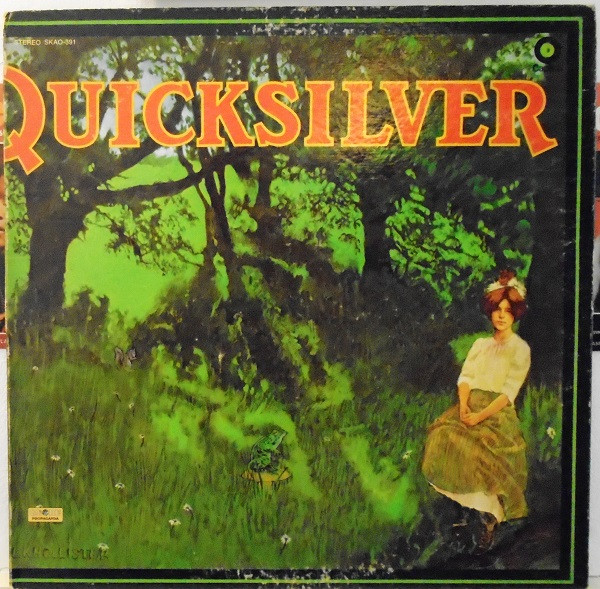
Shady Grove
 View on Discogs
 View on Wikipedia
Album Summary
Shady Grove arrived in 1969 as Quicksilver Messenger Service's third studio album, laid down with the kind of cosmic ambition that only San Francisco in that era could conjure. Released on Capitol Records and produced by David Hassinger — a man who had earned his stripes working alongside the Rolling Stones and knew his way around a studio like few others — this record caught the band at a fascinating crossroads. Hassinger brought a steady, experienced hand to sessions that might otherwise have drifted into the stratosphere, helping shape a sound that honored Quicksilver's improvisational DNA while reaching toward something more structured and song-focused. The result was a album that breathed differently than what came before it, leaning into melody and accessibility without ever fully abandoning the sprawling, exploratory spirit that made this band something special in the first place.
Reception
- The album achieved moderate commercial success, earning Quicksilver Messenger Service a place on the Billboard 200 and reinforcing their standing as one of the most vital bands to emerge from the San Francisco psychedelic scene.
- Critics of the era offered a mixed but broadly respectful reception, acknowledging the album's deliberate shift toward a more polished, pop-influenced sound while recognizing the instrumental sophistication still running beneath the surface.
- The album secured meaningful FM radio exposure, cementing Quicksilver's reputation as a band capable of holding their own on the airwaves alongside the most prominent rock acts of the late 1960s.
Significance
- Shady Grove stands as a document of the San Francisco psychedelic scene's organic evolution in 1969 — a moment when bands raised on improvisation and exploration began reckoning seriously with the possibilities of the studio as a compositional tool.
- The album demonstrated Quicksilver Messenger Service's remarkable range, moving fluidly between delicate passages like 'Flute Song' and the sprawling, shape-shifting energy of tracks like 'Joseph's Coat' and 'Edward, (The Mad Shirt Grinder),' revealing a band of genuine depth and versatility.
- By threading together psychedelic textures, folk influences, and rock-oriented structures across its nine tracks, Shady Grove helped chart a path that West Coast bands would follow as the counterculture moment began its transition into the new decade.
Tracklist
-
A1 Shady Grove 91
 2:57
2:57
-
A2 Flute Song 138
5:21
-
A3 3 Or 4 Feet From Home 141
2:46
-
A4 Too Far 96
4:24
-
A5 Holy Moly 86
4:53
-
B1 Joseph's Coat 116
4:34
-
B2 Flashing Lonesome 128
5:24
-
B3 Words Can't Say —
3:20
-
B4 Edward, (The Mad Shirt Grinder) 128
9:17

Artist Details
Quicksilver Messenger Service was one of the crown jewels of the San Francisco psychedelic rock scene, forming in 1965 right there in the Bay Area alongside fellow travelers like Jefferson Airplane and the Grateful Dead, weaving together blues, folk, and long, exploratory guitar jams that could take a listener on a journey halfway to the cosmos and back. Built around the searing, fluid guitar work of John Cipollina and Gary Duncan, they became a cornerstone of the Haight-Ashbury counterculture movement, with their 1969 album Happy Trails capturing that live, free-flowing spirit better than almost anything else from that era. Though they never quite broke through to the mainstream fame of some of their contemporaries, the true heads always knew that Quicksilver was the real deal — a band that embodied the restless, searching soul of the late sixties like few others could.