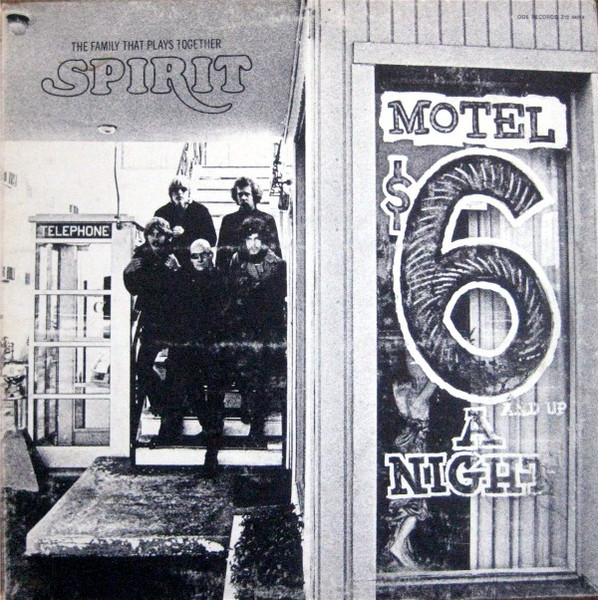
The Family That Plays Together
 View on Discogs
 View on Wikipedia
Album Summary
The Family That Plays Together is Spirit's second studio album, and honey, this record right here is where the band started to truly find their voice. Released in 1968 on Ode Records and produced by the masterful Lou Adler, this album captures a group of musicians who were operating on a whole different level from what most cats were doing out on the West Coast at the time. The core lineup — Jay Ferguson on vocals and keyboards, the endlessly inventive Randy California on guitar, Mark Andes holding it down on bass, and the incomparable Ed Cassidy on drums — came into the studio with something to prove, and what they laid down was a testament to just how deep the well of their collective talent truly ran. Recorded at the height of the psychedelic era, this album is a document of a band in full bloom, stretching out across blues, folk, and experimental rock with the kind of effortless confidence that only comes when musicians are playing together like family.
Reception
- The album climbed to number 23 on the Billboard 200, marking the strongest commercial showing of Spirit's career up to that point.
- Critics of the era responded warmly, singling out the band's musicianship and their rare gift for weaving psychedelic rock, blues, and folk into something that felt entirely their own.
- The album firmly planted Spirit's flag in the fertile soil of the Los Angeles psychedelic rock scene, cementing their place among the city's most vital and original acts of 1968.
Significance
- The Family That Plays Together represented a clear and meaningful step forward from Spirit's debut, showcasing more ambitious arrangements and a broader instrumental palette that signaled a band growing into something truly special.
- This album stands as one of the defining statements of the late 1960s West Coast psychedelic rock movement, blending mystical sensibilities with a level of musical sophistication that set Spirit apart from their contemporaries.
- Randy California's guitar work throughout this record — burning and searching and utterly unique — helped establish him as one of the most compelling and underappreciated voices on the instrument to emerge from the entire psychedelic era.
Tracklist
-
A1 I Got A Line On You 152
 2:39
2:39
-
A2 It Shall Be 118
3:24
-
A3 Poor Richard 113
2:31
-
A4 Silky Sam 94
4:57
-
A5 The Drunkard —
2:27
-
A6 Darlin If —
2:27
-
B1 All The Same 109
4:41
-
B2 Jewish 99
3:23
-
B3 Dream Within A Dream 94
3:13
-
B4 She Smiled —
2:30
-
B5 Aren't You Glad 146
5:25

Artist Details
Spirit was a brilliant and beautifully strange band that came together in Los Angeles back in 1967, blending rock, jazz, blues, and psychedelia into something that didn't quite sound like anything else on the radio — their self-titled debut and the classic *Twelve Dreams of Dr. Sardonicus* from 1970 showed a band operating on a whole other cosmic level, led by the gifted Randy California on guitar alongside his stepfather, jazz drummer Ed Cassidy. They never got the massive mainstream recognition they deserved, but serious music lovers knew the truth — Spirit was one of the most adventurous and soulful acts to come out of the California rock scene, and their influence quietly ran deep through the roots of progressive and psychedelic rock for years to come.