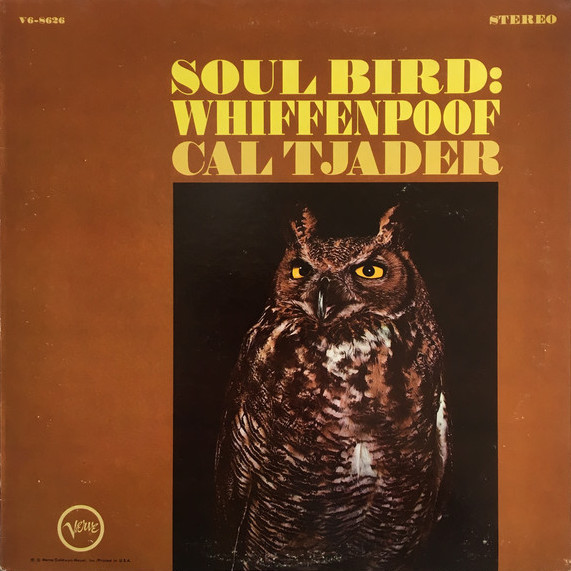
Soul Bird: Whiffenpoof
 View on Discogs
 View on Wikipedia
Album Summary
Cal Tjader's 'Soul Bird: Whiffenpoof' came to life in 1965 on Verve Records, a home that understood exactly what Tjader was cooking up and gave him the room to do it right. This was a man at the height of his powers, leading a tight, soulful ensemble through a session that captured everything beautiful about where West Coast Latin jazz was living in the mid-1960s. Tjader's vibraphone sang and shimmered at the center of it all, surrounded by arrangements that wrapped Afro-Cuban rhythmic heat around the cool, sophisticated soul-jazz sensibility that had become his calling card. The record sat right at the intersection of Latin groove, bossa nova warmth, and the organ-and-vibes soul-jazz sound that was lighting up the era — a document of a master craftsman doing what he was born to do, on a label that knew how to let greatness breathe.
Reception
- The album was received warmly by fans of Latin jazz and soul-jazz alike, fitting naturally into the mid-1960s appetite for sophisticated, groove-driven instrumental records that could satisfy both the jazz purist and the casual listener looking for something with real feeling.
- Critics recognized Tjader's continued mastery of the vibraphone and his rare gift for blending Afro-Cuban rhythmic traditions with mainstream jazz sensibilities, further cementing his standing as one of the preeminent voices in West Coast Latin jazz.
- While the album did not generate notable chart milestones, it contributed to Tjader's steady and respected commercial profile throughout the 1960s, a period when his Verve recordings reliably found audiences across the jazz spectrum.
Significance
- 'Soul Bird: Whiffenpoof' stands as a richly textured example of the soul-jazz and Latin jazz crossover that Tjader helped define — a record that proved Afro-Cuban rhythms and the soulful vibes-and-groove sound of mid-1960s jazz were not just compatible but deeply, naturally intertwined.
- The album represents a meaningful chapter in the maturation of the West Coast Latin jazz movement, demonstrating through tracks like 'Soul Bird (Tin Tin Dao)' and 'Samba De Orfeu' how thoroughly Tjader and his circle had absorbed and reimagined Afro-Caribbean musical traditions on their own creative terms.
- The invocation of 'Soul Bird' in the album's title places Tjader's work squarely within the broader spiritual and soulful vocabulary that jazz was developing in the mid-1960s, connecting his Latin groove sensibility to the deeper cultural and emotional currents running through American jazz during that transformative decade.
Tracklist
-
A1 The Whiffenpoof Song 96
 2:24
2:24
-
A2 Soul Bird (Tin Tin Dao) —
2:35
-
A3 How High The Moon 133
4:05
-
A4 That's All 81
2:20
-
A5 Soul Motion 122
3:15
-
A6 Reza 155
3:40
-
B1 The Prophet 132
2:54
-
B2 Sonny Boy 81
3:27
-
B3 Doxy 135
4:15
-
B4 Samba De Orfeu 111
2:10
-
B5 Shiny Silk Stockings —
2:30
-
B6 Daddy Wong Legs 125
3:40

Artist Details
Cal Tjader was a West Coast cat who made his mark blending cool jazz with the fire of Afro-Cuban rhythms, bringing that irresistible Latin jazz sound to life from his base in San Francisco starting in the early 1950s and carrying it all the way through to his passing in 1982. A vibraphonist of extraordinary sensitivity, Tjader had a gift for making those Latin percussion grooves feel as natural as breathing, recording a string of beloved albums for Fantasy Records that helped bring Latin jazz to mainstream American ears without ever losing its soul. His work stands as a bridge between cultures, earning him a Grammy Award for his 1980 album *La Onda Va Bien*, and his recordings remain touchstones for anyone who wants to understand how jazz and Latin music found each other and fell deeply, beautifully in love.