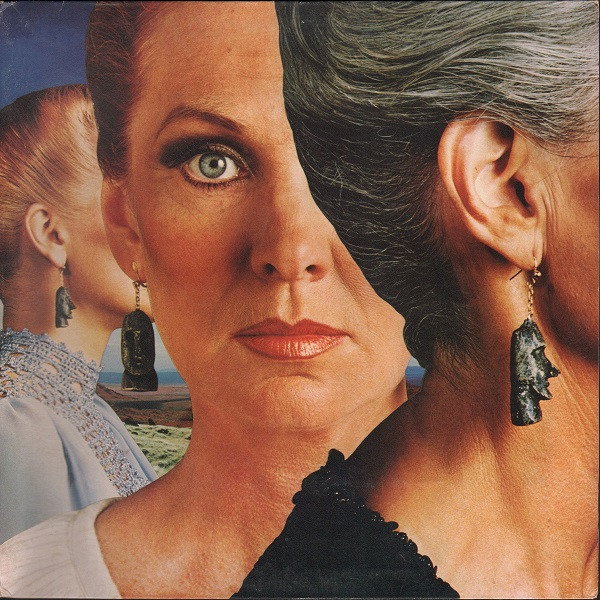

Trilogy
 View on Discogs
 View on Wikipedia
Album Summary
Trilogy was laid down at Advision Studios in London and came out in July 1972 on Island Records — with Atlantic handling distribution across the States — produced by the band themselves alongside engineer Eddie Offord, the same sonic architect who helped shape so much of the progressive rock landscape in those golden years. This was ELP firing on all cylinders, following up the momentum they had built with a record that stretched out in every direction — original compositions sitting side by side with classical adaptations, all of it wrapped in that unmistakable sound Greg Lake and Keith Emerson and Carl Palmer had been refining since the day they first walked into a room together. Eddie Offord brought a clarity and depth to the production that let every note breathe, and the result was an album that felt both massive and intimate at the same time.
Reception
- Trilogy performed with serious commercial muscle, climbing to number 2 on the UK Albums Chart and making strong inroads across European markets, reaffirming ELP's position at the very top of the progressive rock world in the early 1970s.
- Critical reception was a spirited debate at the time — purists wrestled with the band's classical crossover ambitions — but the fans never wavered, and history has been kind, with the album now standing as one of the most respected works in the ELP catalog.
- The title track 'Trilogy' drew particular praise for its sweeping orchestral scope, held up as a showcase for both Greg Lake's gift for melody and Keith Emerson's commanding keyboard artistry.
Significance
- Trilogy stands as one of the definitive statements of the classical-rock fusion movement, with Emerson weaving Romantic-era compositional architecture into the bones of rock instrumentation in a way that genuinely expanded the vocabulary of progressive rock.
- The album cemented ELP's legacy as one of the great supergroups of their era, proving that rock musicians could engage deeply and sincerely with the classical tradition while still reaching a massive popular audience.
- 'From the Beginning' revealed a quieter, more acoustic dimension to the band that surprised listeners and demonstrated ELP had far more range than the bombastic symphonic rock tag ever gave them credit for — a song that has endured long past its moment.
Samples
- Hoedown — the adaptation of Aaron Copland's 'Hoedown' has been revisited and sampled across various media productions and recordings, making it one of the most recognizable tracks from this album in pop culture contexts.
Tracklist
-
A1 The Endless Enigma (Part 1) —
 6:37
6:37
-
A2 Fugue 185
1:57
-
A3 The Endless Enigma (Part 2) —
2:00
-
A4 From The Beginning 133
4:14
-
A5 The Sheriff 177
3:22
-
A6 Hoedown —
3:48
-
B1 Trilogy 116
8:54
-
B2 Living Sin 163
3:11
-
B3 Abaddon's Bolero 131
8:13

Artist Details
Emerson, Lake & Palmer — or ELP as the cats in the know called them — came together in England in 1970, a supergroup born from the collision of three virtuosos: keyboard wizard Keith Emerson, the velvet-voiced bassist and guitarist Greg Lake, and the thunderous percussionist Carl Palmer, who together forged a sound that married classical music with hard rock in a way that made the whole world sit up straight. They were the architects of progressive rock at its most ambitious and bombastic, filling concert halls with Moog synthesizers, orchestras, and enough musical complexity to make your head spin in the most beautiful way. Their cultural significance lies in how they dared to treat rock music as serious art, pushing the boundaries of what a three-piece band could achieve and leaving a legacy that still echoes through every prog rock musician who picked up an instrument and dared to dream bigger.