
Brain Salad Surgery
 View on Discogs
 View on Wikipedia
Album Summary
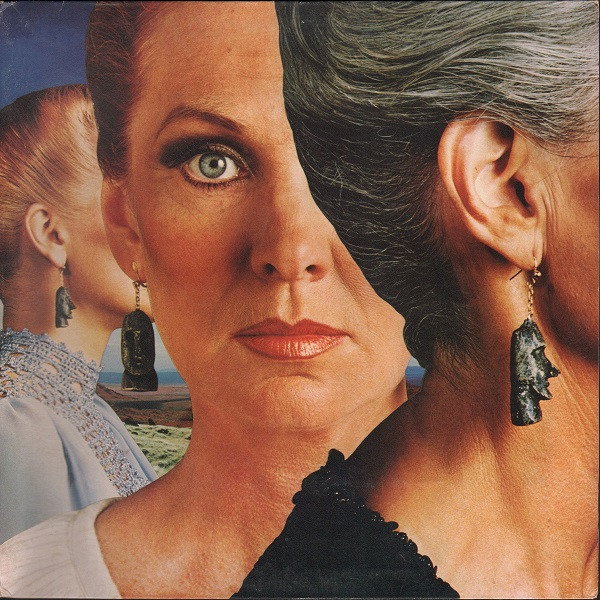
Brain Salad Surgery came to life in 1973, a testament to the towering ambition of three musicians who refused to be contained by conventional rock boundaries. Recorded and released on Manticore Records — the band's own label, distributed through Atlantic — this was Emerson, Lake & Palmer producing themselves, trusting their own vision without a outside hand steering the ship. Greg Ridley engineered the sessions, helping to capture the sheer sonic enormity of what Keith Emerson, Greg Lake, and Carl Palmer were laying down. The album arrived late in 1973, dressed in a now-legendary H.R. Giger cover that was as otherworldly and challenging as the music inside, and it hit the world like a freight train running on pure, unapologetic creativity.
Reception
- Brain Salad Surgery climbed to #2 on the Billboard 200 and reached #1 in the UK, cementing ELP's standing as one of the most commercially powerful progressive rock acts of the era.
- Critics and fans alike celebrated the album's technical virtuosity and compositional complexity, with the band's instrumental prowess drawing reverence from across the musical spectrum.
- The album achieved platinum certification in multiple countries, proving that ambitious, uncompromising progressive rock could move serious units in the mainstream marketplace.
Significance
- Brain Salad Surgery stands as one of the definitive monuments of progressive rock at its absolute peak — elaborate arrangements, deep classical influences, and extended instrumental passages woven together with a confidence that only a band firing on all cylinders could muster.
- Keith Emerson's work throughout the album pushed the synthesizer further into the foreground of rock music than almost anyone had dared before, helping to define what the instrument could mean in a full-band context for an entire generation of musicians.
- The album represents that rare and precious moment when artistic ambition and commercial viability locked arms and walked together, demonstrating that the 1970s progressive rock movement was not a niche curiosity but a genuine cultural force.
Tracklist
-
A1 Jerusalem 139
 2:41
2:41
-
A2 Toccata 106
7:16
-
A3 Still....You Turn Me On —
2:50
-
A4 Benny The Bouncer 150
2:15

Artist Details
Emerson, Lake & Palmer — or ELP as the cats in the know called them — came together in England in 1970, a supergroup born from the collision of three virtuosos: keyboard wizard Keith Emerson, the velvet-voiced bassist and guitarist Greg Lake, and the thunderous percussionist Carl Palmer, who together forged a sound that married classical music with hard rock in a way that made the whole world sit up straight. They were the architects of progressive rock at its most ambitious and bombastic, filling concert halls with Moog synthesizers, orchestras, and enough musical complexity to make your head spin in the most beautiful way. Their cultural significance lies in how they dared to treat rock music as serious art, pushing the boundaries of what a three-piece band could achieve and leaving a legacy that still echoes through every prog rock musician who picked up an instrument and dared to dream bigger.