Full Circle
 View on Discogs
 View on Wikipedia
Album Summary
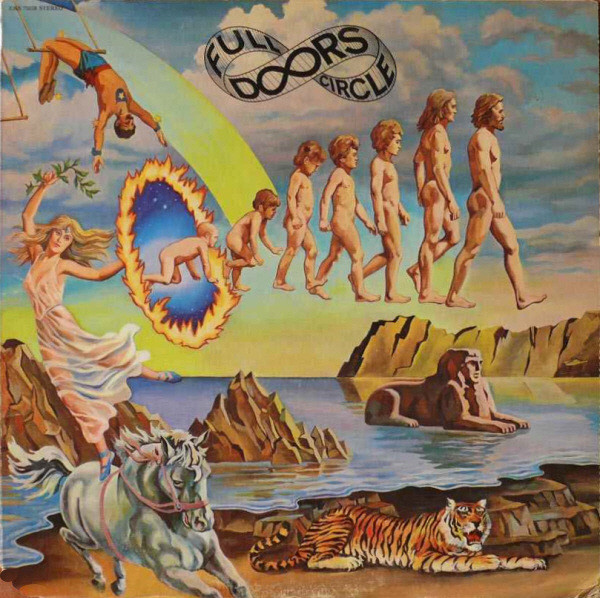
Full Circle was the final studio album by The Doors, released in 1972 on Elektra Records — and baby, it came out of some of the deepest waters any band has ever had to wade through. Recorded in the heavy shadow of Jim Morrison's passing in July 1971, the album was produced by the three surviving members themselves: the soulful architect Ray Manzarek on keys, the searing Robby Krieger on guitar, and the ever-steady John Densmore holding it down on drums. Rather than bring in a single voice to fill that unmistakable void, the trio split vocal duties among themselves, pushing forward with a sound that leaned harder into blues-rock and keyboard-driven grooves than anything from the Morrison years. It was a band refusing to go quietly — three brothers in music doing what they knew how to do, even when the world wasn't sure it wanted to hear it.
Reception
- Full Circle met a cool critical reception upon its release, with many reviewers of the day concluding that the album confirmed what a singular, irreplaceable force Jim Morrison had been — the remaining trio, talented as they were, could not quite recapture the electric chemistry that had made The Doors one of rock's most powerful acts.
- The album performed modestly on the charts, falling well short of the commercial heights the band had reached during the Morrison era, and stands as one of their least commercially successful records.
- The single 'The Mosquito' generated some radio play and represented the album's best shot at a breakout moment, but it ultimately failed to cross over into mainstream chart success, reflecting the uphill battle the trio faced in a post-Morrison landscape.
Significance
- Full Circle holds a profound place in rock history as a testament to perseverance — three men who had stood at the mountaintop of American music choosing to honor their craft rather than simply fold, making the album a rare and moving document of artistic determination in the face of devastating loss.
- The album serves as the definitive closing chapter of The Doors story, as Manzarek, Krieger, and Densmore disbanded shortly after its release, giving Full Circle the solemn and irreplaceable weight of a final statement from one of rock's most mythologized groups.
- Ray Manzarek's keyboard work takes center stage throughout Full Circle in a way that illuminates just how foundational his playing was to the band's identity, offering a compelling — if bittersweet — glimpse into the musical direction The Doors might have traveled had they chosen to continue.
Tracklist
-
A1 Get Up And Dance 131
 2:25
2:25
-
A2 4 Billion Souls 151
3:18
-
A3 Verdilac 82
5:40
-
A4 Hardwood Floor 132
3:38
-
A5 Good Rockin' 141
4:22
-
B1 The Mosquito 147
5:16
-
B2 The Piano Bird 167
5:50
-
B3 It Slipped My Mind 128
3:11
-
B4 The Peking King And The New York Queen 150
6:25

Artist Details
The Doors were a blazing, hypnotic rock outfit that rose out of Los Angeles, California in 1965, weaving together blues, psychedelia, and a dark poetic soul unlike anything else coming out of that era. Led by the magnetic and unpredictable Jim Morrison alongside keyboardist Ray Manzarek, guitarist Robby Krieger, and drummer John Densmore, they conjured a sound that felt like midnight on the Sunset Strip — mysterious, dangerous, and deeply alive. Their records, from "Light My Fire" to the epic sprawl of "The End," didn't just shape the counterculture of the late '60s; they permanently etched themselves into the DNA of rock and roll, making The Doors one of the most influential and enduring bands this world has ever known.