Strange Days
 View on Discogs
 View on Wikipedia
Album Summary
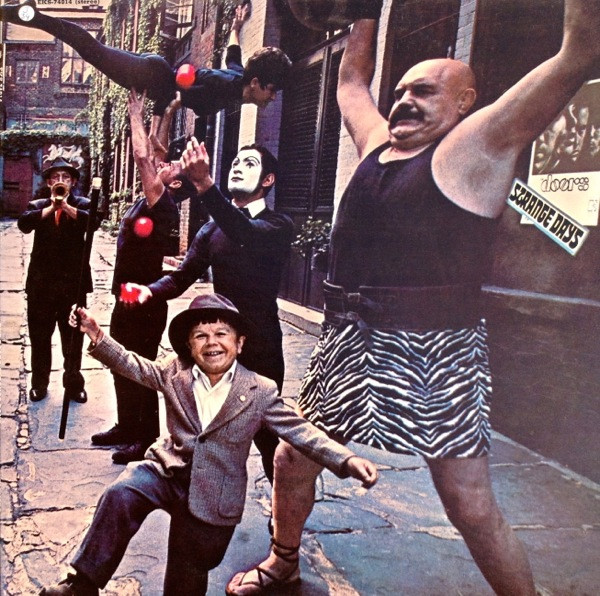
Dropped in September 1967 on Elektra Records, 'Strange Days' was the sophomore statement from four young men out of Los Angeles who had already shaken the world with their debut just months before. Tracked at Sunset Sound Recorders in Hollywood under the steady, sympathetic hand of producer Paul A. Rothchild — the same architect behind their first record — this album found The Doors deepening their sound rather than chasing the success they had just tasted. Jim Morrison, Ray Manzarek, Robby Krieger, and John Densmore walked back into that studio and conjured something darker, stranger, and in many ways more fearless than what came before. Elektra had itself a follow-up, but what the world got was something altogether more restless and alive.
Reception
- The album climbed to #3 on the Billboard 200 chart, a remarkable achievement that confirmed The Doors were no one-album phenomenon.
- It earned platinum certification in the United States, cementing its status as one of the defining commercial and artistic triumphs of the psychedelic era.
- Critics recognized the album as a bold and cohesive artistic statement, with the band's willingness to experiment earning widespread admiration from the rock press of the day.
Significance
- Strange Days stands as a landmark of late 1960s psychedelic rock, weaving blues roots and modal jazz sensibilities into a sound that felt like nothing else on the radio in 1967 — because there was nothing else like it.
- Jim Morrison's poetic vocal delivery reaches new emotional depths across these ten tracks, transforming rock lyrics into something closer to spoken incantation, while Ray Manzarek's organ work holds the whole beautiful darkness together.
- The album's experimental arrangements and the sheer courage of its lyrical content opened doors — forgive the word — for generations of rock and alternative artists who heard in Strange Days a permission slip to go further.
Samples
- "Love Me Two Times" — sampled and interpolated across multiple recordings over the decades, it remains the most recognizable and frequently revisited track from this album in hip-hop and rock sample culture.
- "People Are Strange" — its haunting melodic and lyrical identity has been interpolated and referenced by numerous artists across genres, cementing it as one of the most culturally persistent tracks in The Doors' catalog.
Tracklist
-
A1 Strange Days 119
 3:05
3:05
-
A2 You're Lost Little Girl 111
3:01
-
A3 Love Me Two Times 136
3:23
-
A4 Unhappy Girl 127
2:00
-
A5 Horse Latitudes 44
1:30
-
A6 Moonlight Drive 113
3:00
-
B1 People Are Strange 119
2:10
-
B2 My Eyes Have Seen You 131
2:22
-
B3 I Can't See Your Face In My Mind 97
3:18
-
B4 When The Music's Over 98
11:00

Artist Details
The Doors were a blazing, hypnotic rock outfit that rose out of Los Angeles, California in 1965, weaving together blues, psychedelia, and a dark poetic soul unlike anything else coming out of that era. Led by the magnetic and unpredictable Jim Morrison alongside keyboardist Ray Manzarek, guitarist Robby Krieger, and drummer John Densmore, they conjured a sound that felt like midnight on the Sunset Strip — mysterious, dangerous, and deeply alive. Their records, from "Light My Fire" to the epic sprawl of "The End," didn't just shape the counterculture of the late '60s; they permanently etched themselves into the DNA of rock and roll, making The Doors one of the most influential and enduring bands this world has ever known.