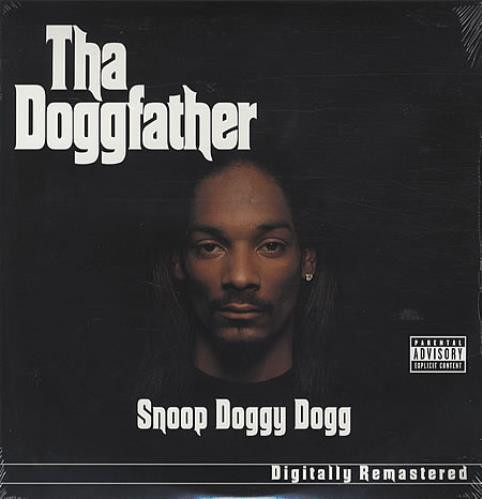
Tha Doggfather
 View on Discogs
 View on Wikipedia
Album Summary
Tha Doggfather came rolling out of the West Coast like a low-rider cruising Crenshaw on a warm November night in 1996, and baby, it was something special. Snoop Dogg's second studio album dropped on Death Row Records at one of the most turbulent moments in hip-hop history — just weeks after the tragic passing of Tupac Shakur — and carried the weight of an entire label's future on its shoulders. Produced largely by Dat Nigga Daz and the Death Row production camp, the album steered Snoop deeper into silky, groove-heavy G-funk territory, wrapping his unmistakable drawl in lush arrangements and slow-rolling West Coast soul. Where his debut hit like a thunderclap, Tha Doggfather settled into something smoother, more assured — a grown man finding his footing in the middle of a storm.
Reception
- Tha Doggfather debuted at number one on the Billboard 200 chart, moving over 600,000 copies in its first week — a testament to Snoop's commanding commercial presence in the mid-1990s.
- The album was certified double platinum by the RIAA, confirming that the people were listening, and listening hard.
- Singles including 'Snoop's Upside Ya Head' connected with audiences and kept Snoop's name firmly in the conversation during one of hip-hop's most competitive eras.
Significance
- Tha Doggfather stood as a pillar of West Coast G-funk at the very moment the genre was being tested — Snoop held the sound down with authority and grace when the culture needed it most.
- Released in the shadow of Death Row Records' internal upheaval and the East Coast-West Coast rivalry at its most volatile, the album represented the label's final commercial peak and Snoop's determination to carry the torch forward.
- The record showcased Snoop's evolution as an artist — moving beyond the raw energy of his debut into a more layered, melodic sensibility that would shape the direction of West Coast hip-hop into the late 1990s and beyond.
Samples
- Snoop's Upside Ya Head — one of the most recognized grooves off the album, drawing later attention from producers mining the Death Row catalog for its smooth G-funk cadence.
- Up Jump Tha Boogie — sampled in subsequent hip-hop productions drawn to its rolling rhythmic foundation rooted in classic West Coast funk.
- Gold Rush — attracted the ear of later producers for its laid-back instrumental texture and has appeared in sampled form in hip-hop tracks building on the G-funk tradition.
Tracklist
-
A1 Intro 100
 0:46
0:46
-
A2 Doggfather 94
3:57
-
A3 Ride 4 Me 72
1:00
-
A4 Up Jump Tha Boogie 97
4:43
-
A5 Freestyle Conversation 91
4:17
-
A6 When I Grow Up 97
0:37
-
A7 Snoop Bounce 96
4:03
-
B1 Gold Rush 119
4:52
-
B2 (Tear 'Em Off) Me And My Doggz —
3:31
-
B3 You Thought 99
4:44
-
B4 Vapors 88
4:21
-
C1 Groupie 96
5:06
-
C2 2001 204
3:32
-
C3 Sixx Minutes 90
4:46
-
C4 (O.J.) Wake Up —
4:43
-
D1 Snoop's Upside Ya Head 100
4:27
-
D2 Blueberry 91
4:15
-
D3 Traffic Jam 117
0:31
-
D4 Doggyland 93
4:39
-
D5 Downtown Assassins 91
4:22
-
D6 Outro 92
0:42

Artist Details
Snoop Dogg, born Calvin Cordozar Broadus Jr. in Long Beach, California, burst onto the scene in 1992 when his smooth, laid-back flow caught the ear of Dr. Dre and landed him on the legendary *The Chronic* album, before he unleashed his own classic debut *Doggystyle* in 1993 — a West Coast gangsta rap masterpiece that put the whole world up on that G-Funk groove. He became one of the most recognizable voices in hip-hop history, with a cool, unhurried delivery that made him as much a cultural icon as a rapper, transcending the genre to become a presence in film, television, and mainstream pop culture for decades. Snoop Dogg's influence on hip-hop is undeniable — he helped define West Coast rap's identity, bridged generations of artists, and proved that a cat from the streets of Long Beach could become one of the most enduring and beloved figures in the history of American music.