
Da Game Is To Be Sold, Not To Be Told
 View on Discogs
Album Summary
Dropped in May 1998 on Priority Records, 'Da Game Is To Be Sold, Not To Be Told' was Snoop Dogg's third studio album and a statement of purpose from the Long Beach legend himself. Produced primarily by Snoop alongside a deep bench of collaborators including Timbaland, Battlecat, and The Alchemist, this record was born out of sessions spread across Los Angeles and reflected a man who was no longer just a star — he was becoming an architect. Coming off his departure from Death Row Records, Snoop stepped into the executive producer chair with the kind of cool confidence that only comes from a few years of surviving the fire, and what emerged was a West Coast collection that carried the weight of that journey in every groove.
Reception
- The album debuted at number 2 on the Billboard 200, a powerful commercial showing that confirmed Snoop's audience had followed him loyally into this new chapter of his career.
- Critical reception was generally warm, with reviewers recognizing the album's polished production and Snoop's signature laid-back delivery, while some noted a more commercially minded direction compared to his earlier Death Row work.
- The album moved significant units in its opening week, reinforcing Snoop Dogg's standing as one of the most bankable names in late-1990s hip-hop regardless of label affiliation.
Significance
- The album stands as a declaration of independence, marking the moment Snoop Dogg fully stepped into his own as both artist and executive producer, shaping his sound on his own terms outside the shadow of Death Row Records.
- Bringing together Timbaland's East Coast-leaning rhythmic sensibility with Battlecat's deep West Coast funk roots, the record captured a fascinating creative tension that reflected where hip-hop was pulling itself in the late 1990s.
- As one of the first major West Coast releases on Priority Records following Snoop's high-profile label transition, the album helped demonstrate that G-funk and West Coast hip-hop could sustain commercial momentum into the new era without missing a step.
Tracklist
-
A1 Snoop World 88
 5:20
5:20
-
A2 I Can't Take The Heat —
4:10
-
A3 Woof! 166
4:22
-
A4 Gin & Juice II 91
3:36
-
A5 Show Me Love 80
3:53
-
B1 Hustle N' Ball —
3:25
-
B2 Don't Let Go 87
3:47
-
B3 Tru Tank Dogs 77
3:55
-
B4 Whatcha Gon Do? —
2:37
-
B5 Still A G Thang 98
4:20
-
C1 20 Dollars To My Name 167
4:08
-
C2 D.O.G.'s Get Lonely 2 125
3:15
-
C3 Ain't Nut'in Personal 86
3:37
-
C4 DP Gangsta 94
4:52
-
C5 Game Of Life 85
3:52
-
D1 See Ya When I Get There 88
3:20
-
D2 Pay For P... 156
1:44
-
D3 Picture This 85
2:31
-
D4 Doggz Gonna Get Ya 94
4:59
-
D5 Hoes, Money & Clout 97
3:21
-
D6 Get Bout It & Rowdy 77
4:22

Artist Details
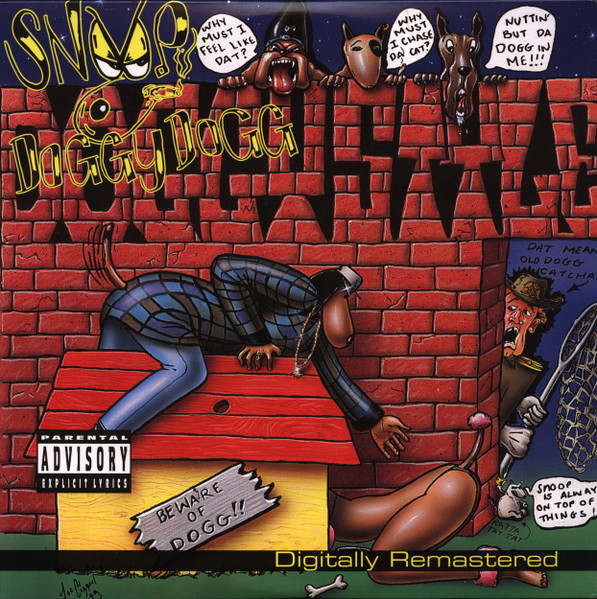
Snoop Dogg, born Calvin Cordozar Broadus Jr. in Long Beach, California, burst onto the scene in 1992 when his smooth, laid-back flow caught the ear of Dr. Dre and landed him on the legendary *The Chronic* album, before he unleashed his own classic debut *Doggystyle* in 1993 — a West Coast gangsta rap masterpiece that put the whole world up on that G-Funk groove. He became one of the most recognizable voices in hip-hop history, with a cool, unhurried delivery that made him as much a cultural icon as a rapper, transcending the genre to become a presence in film, television, and mainstream pop culture for decades. Snoop Dogg's influence on hip-hop is undeniable — he helped define West Coast rap's identity, bridged generations of artists, and proved that a cat from the streets of Long Beach could become one of the most enduring and beloved figures in the history of American music.