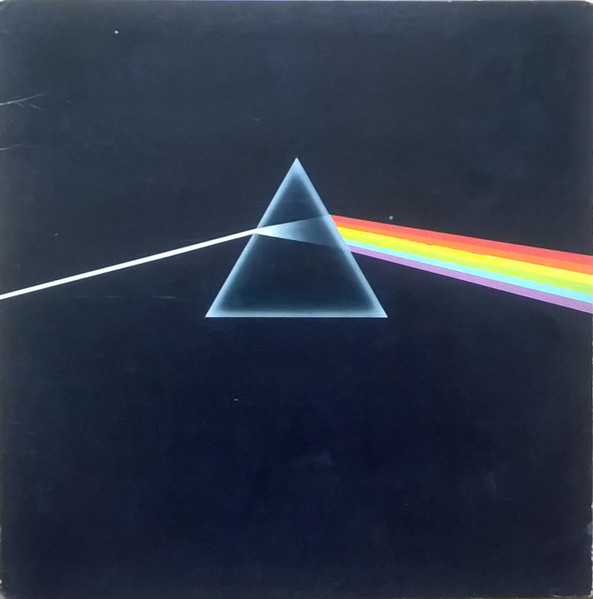
The Dark Side Of The Moon
 View on Discogs
 View on Wikipedia
Album Summary
The Dark Side of the Moon was laid down between 1972 and 1973 at the legendary Abbey Road Studios in London, with Pink Floyd taking the production reins themselves and the extraordinarily gifted engineer Alan Parsons lending his golden ears to shape one of the most sonically breathtaking records ever committed to tape. Released on March 1, 1973, through Harvest Records — EMI's distinguished progressive rock imprint — this album didn't just arrive, it landed like a meteor. It was the culmination of everything Pink Floyd had been reaching for: a sweeping, unified meditation on the human condition, touching the deepest nerves around mortality, mental anguish, greed, and the relentless passage of time. Every texture, every heartbeat, every saxophone wail was placed with surgical intention, and the world heard it and was forever changed.
Reception
- Debuted at number two on the Billboard 200 and went on to become one of the best-selling albums in recorded music history, spending over 900 weeks on the Billboard 200 chart — a feat that still stands as one of the most astonishing chart runs any album has ever achieved.
- Received sweeping critical acclaim upon its release, with reviewers marveling at its innovative production, thematic cohesion, and the kind of emotional depth that simply wasn't supposed to exist in rock and roll.
- Earned a Grammy Hall of Fame Award and has been enshrined near the very top of virtually every serious critical ranking of the greatest albums ever made.
Significance
- Elevated the concept album to an entirely new standard, weaving Speak To Me through Eclipse into one unbroken emotional and philosophical journey — a seamless arc through the human experience that made every prior attempt at the form feel like a rough draft.
- Struck a balance that progressive rock had never quite managed before: wildly experimental studio architecture sitting comfortably alongside melodies and emotional resonance that could move a listener to tears, proving that ambition and accessibility were never mutually exclusive.
- Permanently raised the bar for studio craft in rock music, with Pink Floyd and Alan Parsons deploying multitrack recording, synthesizers, tape loops, and innovative sound design in ways that rewrote what a recording studio could be used for and influenced production standards for decades to come.
Samples
- "Money" — one of the most recognizable and frequently sampled tracks in classic rock, built on its iconic cash register loop; sampled and interpolated across hip-hop and R&B for decades, with its distinctive rhythmic foundation making it an enduring source material for producers.
- "Brain Damage" — sampled by various hip-hop artists drawn to its atmospheric keyboards and lyrical imagery; its haunting melodic phrases have appeared in beats across multiple eras of rap production.
- "Time" — the ticking clocks and explosive alarm bells that open the track have been lifted and used as samples in hip-hop and electronic music, making its intro one of the more recognizable sonic grabs from the album.
- "The Great Gig In The Sky" — Clare Torry's visceral, wordless vocal performance has been sampled and referenced by artists seeking to evoke raw emotional power, appearing in R&B and soul-influenced productions.
- "Any Colour You Like" — its synthesizer and guitar textures have been sampled in electronic and hip-hop contexts, prized for the hypnotic, psychedelic quality of its instrumental palette.
Tracklist
-
A1 Speak To Me 62
 1:30
1:30
-
A2 Breathe 64
2:43
-
A3 On The Run 166
3:30
-
A4 Time 122
6:53
-
A5 The Great Gig In The Sky 116
4:15
-
B1 Money 122
6:30
-
B2 Us And Them 72
7:34
-
B3 Any Colour You Like 76
3:24
-
B4 Brain Damage 136
3:50
-
B5 Eclipse 136
1:45

Artist Details
Pink Floyd emerged from the groovy streets of London back in 1965, a psychedelic rock outfit that took the world on a cosmic journey unlike anything ears had ever processed before — blending blues, jazz, and experimental soundscapes into something so deep and otherworldly it practically rewired the soul. These cats — Syd Barrett, Roger Waters, Richard Wright, Nick Mason, and later the incomparable David Gilmour — built a legacy on concept albums like *The Dark Side of the Moon* and *The Wall* that didn't just top charts, they became monuments of human expression, selling hundreds of millions of records and proving that rock music could be as profound and philosophical as any art form ever created. Pink Floyd's influence stretches far beyond music, shaping how the world thinks about live performance, album artwork, and the very idea that a record can be a complete, unified statement rather than just a collection of songs.