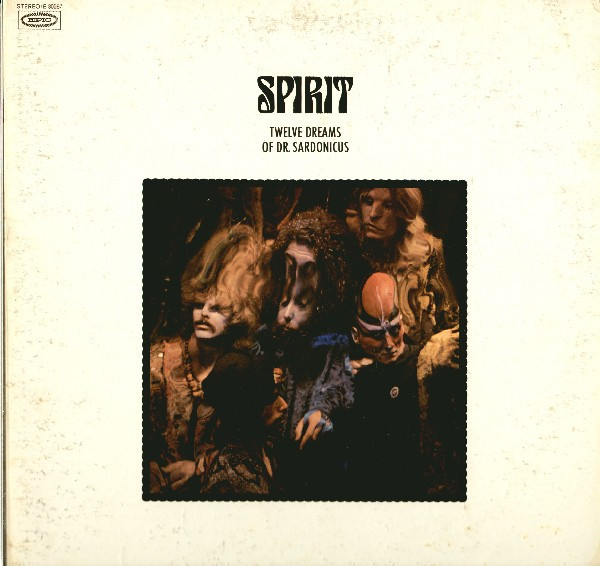
Twelve Dreams Of Dr. Sardonicus
 View on Discogs
Album Summary
Twelve Dreams of Dr. Sardonicus was laid down and released in 1970 on the Ode Records label, and honey, this was Spirit firing on all cylinders at the height of their creative powers. The Los Angeles-bred outfit — anchored by the legendary guitarist Randy California and the inimitable drumming of Ed Cassidy — brought in David Briggs as producer, and together they conjured something that felt like it came from another dimension entirely. This was a record born out of genuine artistic restlessness, weaving psychedelic textures, progressive architecture, and hard rock muscle into a tapestry that had no real blueprint before it. Spirit weren't chasing trends — they were setting them, and Twelve Dreams stands as the fullest, most realized expression of everything this band was reaching for.
Reception
- The album achieved moderate commercial success upon release, climbing to approximately #63 on the Billboard 200 chart in the United States.
- Critical reception at the time was generally warm, with reviewers celebrating the band's musicianship and their fearless, inventive approach to rock composition.
- Over the decades, the album has been significantly reassessed and now commands deep respect as a cult classic, with many later critics placing it among the finest American rock records of its era.
Significance
- Twelve Dreams of Dr. Sardonicus stands as a towering achievement in the American psychedelic-progressive tradition, showcasing Spirit's rare ability to fuse hard rock intensity, jazz sophistication, and lysergic imagination into something wholly their own.
- The album represents one of the most distinctly American responses to the art rock movement, eschewing British pomp in favor of a raw, sun-baked Los Angeles spirituality that runs through every track from Prelude - Nothin' To Hide straight through to Soldier.
- With its layered production, thematic sequencing, and the sheer compositional ambition on display across both sides of the record, Twelve Dreams helped expand the vocabulary of what rock music could say and how beautifully strange it could sound.
Samples
- Nature's Way — one of the most recognizable tracks from the album, with a documented sampling history that has introduced Spirit's work to entirely new generations of listeners across multiple decades.
Tracklist
-
A1 Prelude - Nothin' To Hide 109
 3:41
3:41
-
A2 Nature's Way 100
2:30
-
A3 Animal Zoo 86
3:20
-
A4 Love Has Found A Way 113
2:42
-
A5 Why Can't I Be Free 121
1:03
-
A6 Mr. Skin 103
3:50
-
B1 Space Child 124
3:26
-
B2 When I Touch You 134
5:35
-
B3 Street Worm 162
3:40
-
B4 Life Has Just Begun 87
3:22
-
B5 Morning Will Come 133
2:58
-
B6 Soldier 60
2:43

Artist Details
Spirit was a brilliant and beautifully strange band that came together in Los Angeles back in 1967, blending rock, jazz, blues, and psychedelia into something that didn't quite sound like anything else on the radio — their self-titled debut and the classic *Twelve Dreams of Dr. Sardonicus* from 1970 showed a band operating on a whole other cosmic level, led by the gifted Randy California on guitar alongside his stepfather, jazz drummer Ed Cassidy. They never got the massive mainstream recognition they deserved, but serious music lovers knew the truth — Spirit was one of the most adventurous and soulful acts to come out of the California rock scene, and their influence quietly ran deep through the roots of progressive and psychedelic rock for years to come.