Caravanserai
 View on Discogs
 View on Wikipedia
Album Summary
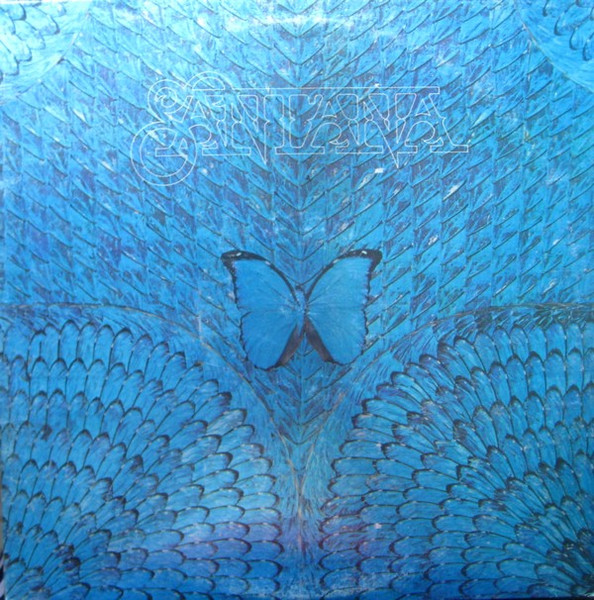
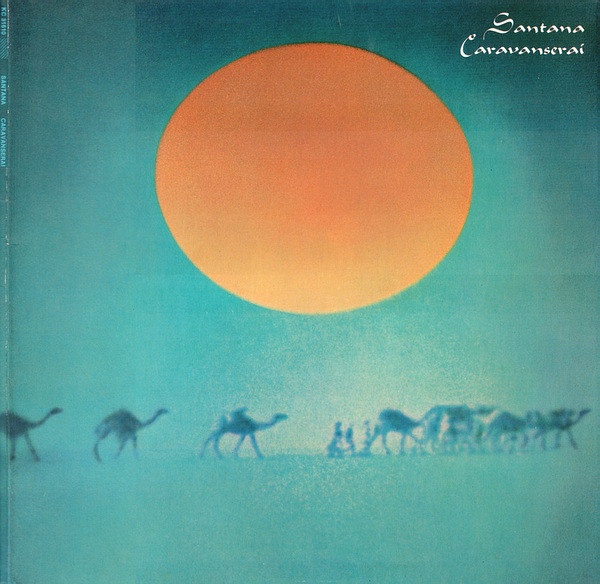
Laid down at Columbia Studios in Los Angeles and released by Columbia Records in 1972, 'Caravanserai' was produced by Carlos Santana and the legendary Teo Macero — a man who knew a thing or two about boundary-pushing records, having shepherded Miles Davis through some of his most adventurous work. This was a deeply personal and pivotal moment for the band, a conscious departure from the commercial rock sound that had made them famous. Carlos was deep into his spiritual journey with Sri Chinmoy, and that seeking, transcendent quality is all over this record. Drummer Michael Shrieve, one of the most gifted young percussionists of his generation, was absent for early sessions but returned to contribute to the final recordings, helping shape the meditative, flowing architecture that makes this album unlike anything else in the Santana catalog.
Reception
- The album peaked at number 8 on the Billboard 200, making it the band's highest-charting album at the time of its release.
- It was certified Gold by the RIAA, a remarkable achievement for a record so uncompromising in its artistic vision and so sparse in conventional radio-friendly singles.
- Though it puzzled some fans who had come up on 'Evil Ways' and 'Black Magic Woman,' serious listeners and critics recognized 'Caravanserai' as a work of rare depth and ambition for its era.
Significance
- Caravanserai marked a profound turning point in Santana's artistic evolution, abandoning the hit-single formula in favor of long-form, largely instrumental compositions that wove Latin percussion, jazz harmony, and spiritual world music into something entirely its own.
- The album stands as one of the finest examples of early 1970s fusion — not fusion as a genre checkbox, but fusion as a lived philosophy, where African rhythms, Miles Davis-influenced improvisation, and rock energy breathed together as one organism.
- It signaled that Latin rock was not a novelty act but a serious vehicle for musical exploration, helping to expand the cultural and artistic vocabulary of rock music at a time when the genre was hungry for new directions.
Samples
- Stone Flower — sampled by various producers in the hip-hop and electronic music communities, drawn to its hypnotic rhythmic groove and warm melodic texture.
Tracklist
-
A1 Eternal Caravan Of Reincarnation 128
 4:25
4:25
-
A2 Waves Within 104
3:54
-
A3 Look Up (To See What's Coming Down) 106
2:55
-
A4 Just In Time To See The Sun 97
2:13
-
A5 Song Of The Wind 179
6:03
-
A6 All The Love Of The Universe 123
7:39
-
B1 Future Primitive 123
4:20
-
B2 Stone Flower 107
6:05
-
B3 La Fuente Del Ritmo 150
4:30
-
B4 Every Step Of The Way 140
9:06

Artist Details
Santana is a rock band formed in San Francisco, California in 1966, led by Mexican-American guitarist Carlos Santana, who immigrated from Autlán de Navarro, Mexico. The group pioneered a distinctive sound that fused rock, blues, and jazz with Afro-Cuban and Latin rhythms, creating a genre-blending style that set them apart from virtually every other act of their era. Their legendary performance at the 1969 Woodstock Festival introduced them to a massive worldwide audience, and their debut album released that same year became a commercial and critical success. Santana experienced a major commercial resurgence in 1999 with the album Supernatural, which won nine Grammy Awards including Album of the Year and became one of the best-selling albums in history. Culturally, Santana holds profound significance as a symbol of Latin musical influence in mainstream American rock, helping to bridge cultures and pave the way for broader acceptance of Latin artists in the global music industry.