
Spirit
 View on Discogs
 View on Wikipedia
Album Summary
Spirit's self-titled 1973 album — not to be confused with the band's 1968 debut — was recorded during one of the most restless and searching chapters in this Los Angeles outfit's storied career, released on Ode Records at a time when the rock world was pulling in a dozen different directions at once. This was a band that refused to be put in a box, and that spirit — no pun intended — courses through every groove of this record. Produced with the band holding the creative reins, the album finds Spirit digging deeper into psychedelic and progressive rock territory, stretching out with the kind of confidence that only comes from years of living inside the music. It was a transitional moment, yes, but transitions in the hands of truly gifted musicians don't sound like uncertainty — they sound like discovery.
Reception
- The album charted on the Billboard 200, affirming that Spirit still had a loyal and devoted audience following them into the more adventurous corners of early 1970s rock.
- Critical response acknowledged the band's formidable instrumental chops and their willingness to push complex arrangements and extended passages further than most of their contemporaries dared to go.
- The album sustained Spirit's momentum as a working, touring band in a progressive rock landscape that was growing more crowded and more competitive with each passing season.
Significance
- Spirit (1973) stands as a genuine artifact of the West Coast progressive and psychedelic rock movements, bearing all the hallmarks of that early 1970s moment — intricate time signatures, layered textures, and a fearless sense of sonic exploration that set the band apart from the pack.
- The record documents Spirit's deliberate evolution away from conventional song structures toward a more album-oriented vision, one where musicianship and atmosphere carried as much weight as melody, as heard across tracks like 'Elijah,' 'Ice,' and 'Give A Life Take A Life.'
- Spirit (1973) cemented the band's standing among serious musicians and devoted listeners as one of the most underappreciated yet genuinely accomplished groups of their era, a reputation that has only grown warmer with the passage of time.
Tracklist
-
A1 Fresh-Garbage —
 3:11
3:11
-
A2 Uncle Jack 127
2:43
-
A3 Mechanical World 80
5:14
-
A4 Taurus 139
2:37
-
A5 Girl In Your Eye 90
3:15
-
A6 Straight Arrow 82
2:51
-
B1 Topanga Windows 112
3:36
-
B2 Gramophone Man 99
3:49
-
B3 Water Woman 87
2:11
-
B4 The Great Canyon Fire In General —
2:46
-
B5 Elijah 71
10:49
-
C1 Dark Eyed Woman 124
3:06
-
C2 Apple Orchard 163
4:05
-
C3 So Little Time To Fly 114
2:45
-
C4 Ground Hog 73
3:01
-
C5 Cold Wind 129
3:20
-
C6 Policeman's Ball 111
2:18
-
D1 Ice 145
5:53
-
D2 Give A Life Take A Life —
3:25
-
D3 I'm Truckin' 86
2:24
-
D4 Clear —
4:08
-
D5 Caught 91
3:10
-
D6 New Dope In Town 93
4:24

Artist Details
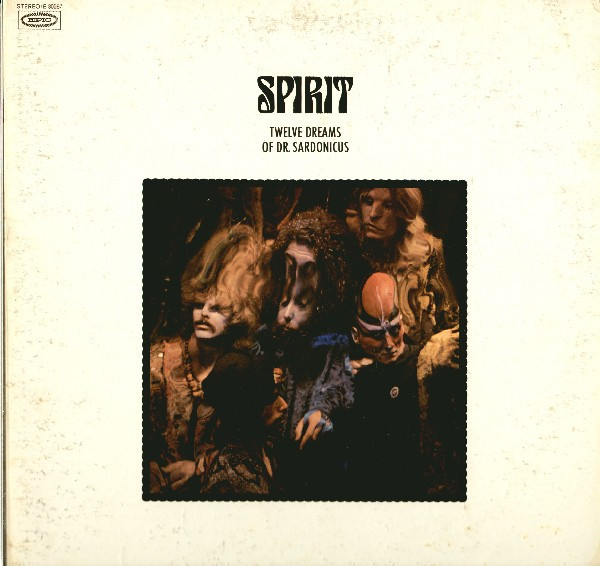
Spirit was a brilliant and beautifully strange band that came together in Los Angeles back in 1967, blending rock, jazz, blues, and psychedelia into something that didn't quite sound like anything else on the radio — their self-titled debut and the classic *Twelve Dreams of Dr. Sardonicus* from 1970 showed a band operating on a whole other cosmic level, led by the gifted Randy California on guitar alongside his stepfather, jazz drummer Ed Cassidy. They never got the massive mainstream recognition they deserved, but serious music lovers knew the truth — Spirit was one of the most adventurous and soulful acts to come out of the California rock scene, and their influence quietly ran deep through the roots of progressive and psychedelic rock for years to come.