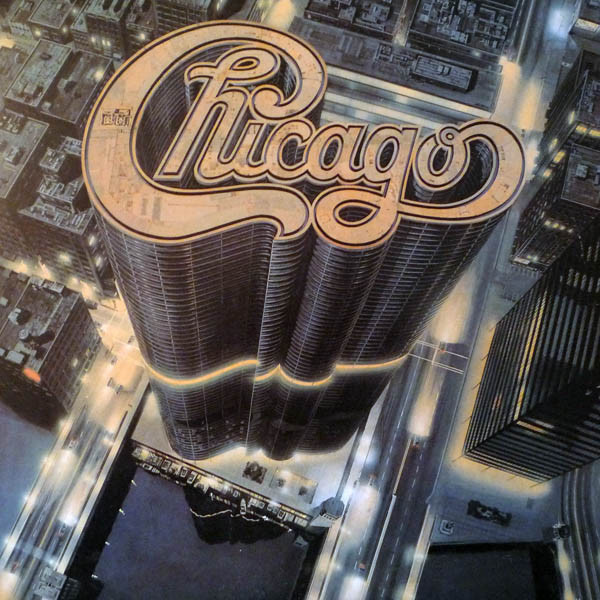
Chicago 13
 View on Discogs
 View on Wikipedia
Album Summary
Chicago 13 came to life in 1979 on Columbia Records, produced by the legendary Phil Ramone — a man who knew his way around a studio like nobody's business. This was the band's thirteenth studio album, and chile, it arrived at a crossroads. The cats from Chicago were feeling the winds of change blowing hard across the music landscape, and they made a conscious decision to step away from those deep jazz-rock grooves that had made them household names and lean into a smoother, more polished pop sound. It was a bold move, a risky move, and it placed Chicago 13 square in the middle of one of the most fascinating transitional chapters in this legendary band's story.
Reception
- The album climbed to number 31 on the Billboard 200 chart, a position that told a real story about the commercial headwinds the band was facing compared to their dominant earlier run through the seventies.
- Radio play was modest and the critical community met the record with mixed feelings, with reviewers widely noting that the signature jazz-rock fire that had defined Chicago's soul had been turned down considerably.
- Commercially, Chicago 13 was viewed as a disappointment, and it sent a signal that the band's grip on mainstream popularity was loosening as the new decade approached.
Significance
- Chicago 13 stands as a document of the band consciously pivoting toward pop and adult contemporary territory, a reflection of the sweeping industry-wide changes reshaping what radio and record buyers wanted in the late 1970s.
- The album captures Chicago at a genuine stylistic turning point, a moment when one of rock and roll's most decorated ensembles was wrestling with its own identity in real time, trying to find its footing on shifting ground.
- Even within its more streamlined pop framework, Chicago 13 held onto the band's horn-driven signature, weaving those brass voices through the polished production aesthetic of the era and proving the group's musicianship never wavered even when the commercial winds did.
Samples
- Street Player — one of the most celebrated samples in dance music history, lifted and transformed by Frankie Knuckles and Jamie Principle into the classic house anthem Your Love, becoming a cornerstone record of the Chicago house music movement in the 1980s.
Tracklist
-
A1 Street Player 129

-
A2 Mama Take 95
-
A3 Must Have Been Crazy 106
-
A4 Window Dreamin' 120
-
A5 Paradise Alley 96
-
B1 Aloha Mama 131
-
B2 Reruns 127
-
B3 Loser With A Broken Heart 78
-
B4 Life Is What It Is 100
-
B5 Run Away 115

Artist Details
Chicago is an American rock band that formed in Chicago, Illinois, in 1967, originally under the name The Chicago Transit Authority before shortening it to Chicago in 1969. The group pioneered a genre often described as rock and roll with horns, blending the raw energy of rock with the sophistication of jazz and classical influences, featuring a distinctive brass section comprising trumpets, trombones, and saxophones alongside a traditional rock lineup. They became one of the best-selling musical acts of all time, with a string of hit singles and albums throughout the 1970s and 1980s including If You Leave Me Now, Hard to Say I'm Sorry, and 25 or 6 to 4, earning numerous Grammy Awards and selling over 100 million records worldwide. Chicago played a pivotal role in establishing the brass rock subgenre and influenced countless artists by demonstrating that orchestral and jazz instrumentation could thrive in a mainstream rock context. Their longevity, spanning more than five decades of continuous performance and recording, cemented their status as one of the most enduring and commercially successful bands in American music history, leading to their induction into the Rock and Roll Hall of Fame in 2016.