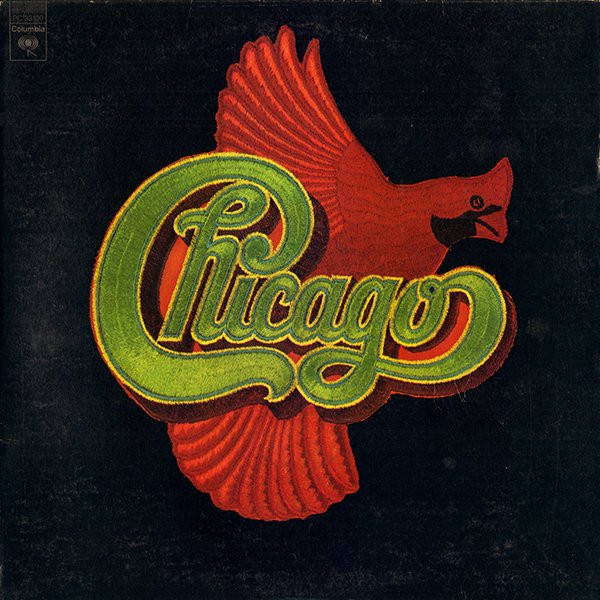
Chicago VIII
 View on Discogs
 View on Wikipedia
Album Summary
Chicago VIII came roaring out in the spring of 1975, released on Columbia Records and produced by the band themselves alongside James William Guercio, the man who had been their sonic architect from the very beginning. Recorded with that same lush, horn-driven intensity that had become the Chicago trademark, this double album found the band pressing deeper into the soft rock and pop territory that was calling their name in the mid-seventies, while still keeping that jazz-funk muscle flexing underneath. The sessions captured a group at a crossroads — seasoned, confident, and commercially sharp — delivering a record that felt both polished and personal, the kind of grooves that sounded just as good on a home turntable as they did blasting out of a car radio on a warm summer night.
Reception
- Chicago VIII debuted strong on the Billboard 200, continuing the band's remarkable run of charting albums through the first half of the decade.
- The old-school rockers in the press had some reservations about the smoother direction, but the record found its audience with ease, as Chicago's fanbase had grown enormous and devoted by this point.
- "Old Days" emerged as the standout commercial moment from the album, connecting with listeners who felt that nostalgic warmth the track radiated from the very first note.
Significance
- "Harry Truman," with its plainspoken political lyricism, stood as one of the more quietly bold statements on the album — a horn-band from Chicago name-checking a plain-talking president in the post-Watergate haze of 1975 hit different, and people felt it.
- Chicago VIII represented the band fully embracing a softer, more song-craft-centered identity, a shift that would define mainstream rock and pop for the rest of the decade and proved that a brass-heavy rock band could survive and thrive in the era of AM radio dominance.
- Tracks like "Ain't It Blue?" and "Oh, Thank You Great Spirit" showed the band still had range and soul to spare, ensuring that Chicago VIII was never just a singles vehicle but a full listening experience that rewarded those who dropped the needle and stayed for the whole ride.
Tracklist
-
A1 Anyway You Want 113
 3:36
3:36
-
A3 Never Been In Love Before 109
4:13
-
A4 Hideaway 148
4:48
-
A5 Till We Meet Again 120
2:05
-
B1 Harry Truman 93
3:08
-
B2 Oh, Thank You Great Spirit 143
7:24
-
B3 Long Time No See 136
2:50
-
B4 Ain't It Blue? —
3:32
-
B5 Old Days 123
3:32

Artist Details
Chicago is an American rock band that formed in Chicago, Illinois, in 1967, originally under the name The Chicago Transit Authority before shortening it to Chicago in 1969. The group pioneered a genre often described as rock and roll with horns, blending the raw energy of rock with the sophistication of jazz and classical influences, featuring a distinctive brass section comprising trumpets, trombones, and saxophones alongside a traditional rock lineup. They became one of the best-selling musical acts of all time, with a string of hit singles and albums throughout the 1970s and 1980s including If You Leave Me Now, Hard to Say I'm Sorry, and 25 or 6 to 4, earning numerous Grammy Awards and selling over 100 million records worldwide. Chicago played a pivotal role in establishing the brass rock subgenre and influenced countless artists by demonstrating that orchestral and jazz instrumentation could thrive in a mainstream rock context. Their longevity, spanning more than five decades of continuous performance and recording, cemented their status as one of the most enduring and commercially successful bands in American music history, leading to their induction into the Rock and Roll Hall of Fame in 2016.