Sticky Fingers
 View on Discogs
 View on Wikipedia
Album Summary
Cut across a handful of storied locations — including the legendary Muscle Shoals Sound Studio down in Alabama, where the soul was thick in the walls — 'Sticky Fingers' came roaring out of the speakers in April 1971 on Rolling Stones Records, the band's own freshly minted independent label. Produced by the masterful Jimmy Miller alongside the Stones themselves, this record represented the group stepping fully into their own power, both creatively and commercially. It was a statement album in every sense — the kind of record that didn't just arrive, it landed.
Reception
- Reached number 1 on the UK Albums Chart and climbed to number 1 on the US Billboard 200, cementing the Stones' commercial dominance at the dawn of the new decade.
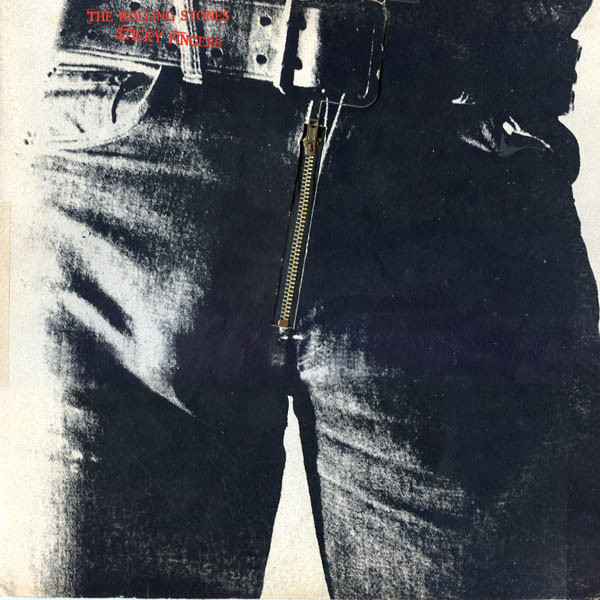
- The album's iconic Andy Warhol-designed cover — featuring a real working zipper — became one of the most instantly recognizable and talked-about pieces of album artwork in the history of rock and roll.
- Critics embraced the record as a bold and fully realized artistic statement, one that captured the Rolling Stones at an undeniable creative peak.
Significance
- Marked a pivotal moment in rock history as the Stones launched their own Rolling Stones Records label, giving the band full creative autonomy and setting a precedent for artist independence in the industry.
- Represented the deepest and most soulful expression of the band's love affair with American blues, weaving together raw Delta influences, country soul, and hard rock swagger into something entirely their own.
- Stands as a cornerstone of early 1970s rock, its groove-heavy, blues-drenched sound helping to define the sonic and spiritual direction of the decade's most enduring music.
Samples
- Brown Sugar — one of the most sampled and interpolated tracks in the Stones' catalog, with a long legacy of references and usage across hip-hop and popular music.
- Wild Horses — sampled and covered across multiple genres, with its melancholic chord progression and emotional weight drawing artists back to it across decades.
- Sister Morphine — sampled and referenced by artists drawn to its dark, cinematic atmosphere and unflinching lyrical honesty.
Tracklist
-
A1 Brown Sugar 129
 3:50
3:50
-
A2 Sway 142
3:45
-
A3 Wild Horses 74
5:41
-
A4 Can't You Hear Me Knocking 152
7:17
-
A5 You Gotta Move 67
2:32
-
B1 Bitch 136
3:42
-
B2 I Got The Blues 120
4:00
-
B3 Sister Morphine 90
5:34
-
B4 Dead Flowers 130
4:05
-
B5 Moonlight Mile 130
5:56

Artist Details
The Rolling Stones, those bad boys out of London, England, came together in 1962 and proceeded to set the world on fire with a raw, blues-drenched rock and roll sound that made even the devil himself tap his foot — Mick Jagger's swagger, Keith Richards' riffs, and that whole crew built something dangerous and beautiful that the world wasn't quite ready for. They stood toe-to-toe with the Beatles as the defining force of the British Invasion, but where the Fab Four gave you sunshine, the Stones handed you a little darkness, a little soul, a little street — and the world ate it up like gospel. Decades deep into their run, with classics like "Paint It Black," "Gimme Shelter," and "Sympathy for the Devil" permanently etched into the fabric of rock history, the Rolling Stones remain a living, breathing monument to the power of music that refuses to be tamed.