
The Best Of Black Sabbath
 View on Discogs
Album Summary
Released in 1979 on NEMS Records and Vertigo, 'The Best Of Black Sabbath' was a landmark compilation that reached back into the vaults and pulled out the crown jewels from Black Sabbath's classic era with the one and only Ozzy Osbourne holding down the mic. This was a band in the middle of a seismic transition — lineup changes were swirling, the winds of a new decade were blowing in — and yet here was the evidence, pressed into vinyl, that what these four lads from Birmingham had built between 1970 and 1978 was nothing short of monumental. Spanning their earliest recordings through their mid-to-late seventies work, the album stood as a powerful retrospective of a band that had essentially conjured an entire genre out of the dark and the heavy, and it arrived at exactly the right moment to remind the world just how deep that catalog ran.
Reception
- The compilation performed well commercially across multiple territories, helping to sustain Black Sabbath's visibility during a period of significant internal transition within the band.
- It was broadly embraced by rock audiences as a reliable and well-curated introduction to the band's essential catalog, drawing both longtime devotees and newly curious listeners.
- Critics generally regarded the collection as a solid representation of Black Sabbath's most important work, acknowledging its value as a document of heavy metal's early foundations.
Significance
- This compilation served as a powerful testament to Black Sabbath's foundational role in the birth of heavy metal and doom metal, gathering in one place the recordings that proved these genres had both artistic depth and undeniable staying power.
- The sequencing of tracks across both sides of the record illustrated the band's remarkable range — from the thunderous riff-driven assault of 'War Pigs' and 'Children Of The Grave' to the haunting, melodic vulnerability of 'Changes' — demonstrating that Black Sabbath were never a one-dimensional force.
- By arriving during a transitional moment in the band's history, the album solidified the legacy of the classic Ozzy-era lineup and ensured that the foundational recordings of one of rock's most influential acts would not be overshadowed by whatever changes lay ahead.
Samples
- "War Pigs" — one of the most recognized riffs in rock history, sampled and interpolated across hip-hop and metal productions over multiple decades, with its opening guitar figure and lyrical themes drawing consistent attention from producers and artists alike.
- "Paranoid" — a cornerstone of heavy metal's early identity, widely sampled and referenced in hip-hop and electronic productions, with its driving guitar riff appearing across numerous recordings throughout the 1980s, 1990s, and beyond.
- "N.I.B." — the bass-driven groove and menacing energy of this track made it a source of fascination for hip-hop producers, with its foundational riff sampled by artists including Nas on 'N.Y. State of Mind' (1994), cementing its place in the sampling canon.
- "Fairies Wear Boots" — sampled by various hip-hop and rock-adjacent producers drawn to its lumbering, hypnotic groove, contributing to the track's reputation as one of the more underappreciated gems in the Black Sabbath catalog.
- "Children Of The Grave" — its relentless rhythmic drive and dark atmosphere attracted producers working in hip-hop and industrial music, earning the track a quiet but meaningful place in the history of heavy music sampling.
Tracklist
-
A1 Paranoid 160
 2:45
2:45
-
A2 Evil Woman —
3:21
-
A3 Changes 81
4:39
-
A4 Sabbath Bloody Sabbath 136
5:42
-
A5 War Pigs 91
7:51
-
B1 Embryo 79
0:28
-
B2 Children Of The Grave 152
5:16
-
B3 Am I Going Insane (Radio) 134
4:17
-
B4 Fairies Wear Boots 136
6:13
-
B5 N.I.B. —
5:20

Artist Details
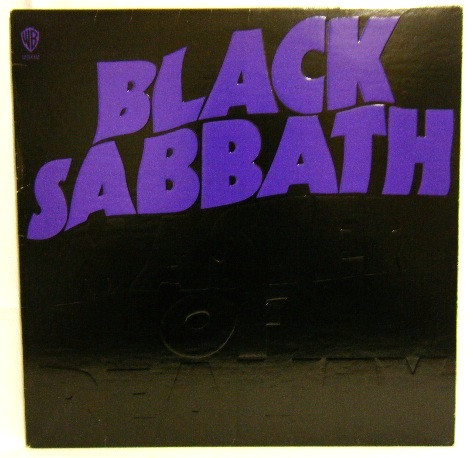
Black Sabbath rose up out of Birmingham, England in 1968 like a storm cloud rolling in over the industrial Midlands, four working-class cats — Ozzy Osbourne, Tony Iommi, Geezer Butler, and Bill Ward — who took the blues, slowed it way down, and wrapped it in something heavy and dark that nobody had ever quite heard before, essentially birthing heavy metal right there in the heart of England. Their ominous guitar riffs, thunderous rhythms, and lyrics drenched in occult imagery made the establishment nervous and the kids absolutely wild, and albums like *Paranoid* and *Master of Reality* became the sacred texts of a whole new generation of musicians who would carry that heavy torch forward for decades. Black Sabbath's influence stretches so deep and so wide that it's nearly impossible to overstate — virtually every hard rock and metal band that came after them owes something to those four brothers from Birmingham who dared to make music that sounded like the world was ending.