Sabotage
 View on Discogs
 View on Wikipedia
Album Summary
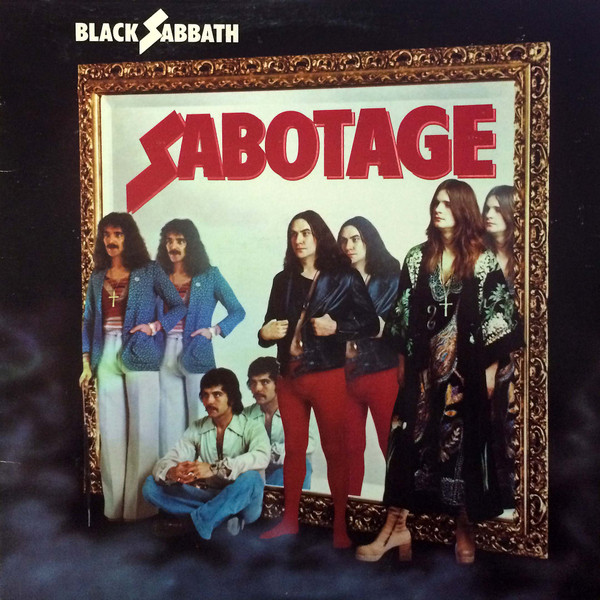
Laid down at the legendary Island Studios in London and unleashed upon the world by NEMS and Warner Bros. Records in July of 1975, 'Sabotage' stands as one of the most raw and emotionally charged records Black Sabbath ever committed to tape. Produced by the band themselves alongside the gifted engineer Martin Birch, this album was born out of genuine turmoil — the four members of Sabbath were deep in legal battles with their management, feeling hunted, harassed, and yes, sabotaged at every turn. That paranoia didn't stay offstage. It bled straight into the grooves of this record, giving 'Sabotage' a tension and urgency that no studio polish could ever manufacture. What came out of those sessions was something untamed, sprawling, and absolutely essential.
Reception
- The album climbed to #7 on the UK Albums Chart and reached #28 on the US Billboard 200, earning gold certification in the United States — a testament to the band's loyal and ever-growing following on both sides of the Atlantic.
- Critics at the time recognized the musical ambition on display, praising the album's heavier textures, darker lyrical themes, and the band's willingness to push beyond the boundaries of what heavy rock was supposed to sound like.
- The album has grown substantially in critical stature over the decades, now widely regarded as one of the defining documents of 1970s heavy metal and a high-water mark in Black Sabbath's catalog.
Significance
- Sabotage deepened the blueprint Black Sabbath had been drafting since their debut — the crushing riffs, the doom-laden atmosphere, the sense that something wicked was always just around the corner — and in doing so, helped lay the foundation for entire lineages of metal that would follow in the decades ahead.
- Released at a time when glam rock was still commanding radio airwaves, Sabotage planted its flag firmly in the dirt and refused to sparkle, representing a countercultural heaviness that resonated with listeners craving something more honest and more dangerous.
- Tracks like 'Symptom Of The Universe' are now recognized as proto-thrash and proto-speed metal, placing this album decades ahead of its time and cementing its place as a genuine turning point in the evolution of heavy music.
Samples
- Hole In The Sky — the opening riff has been lifted and interpolated across various heavy metal and hard rock recordings, celebrated as one of the most viscerally powerful album-opening statements in Sabbath's catalog with a notable sampling presence in rock-influenced hip-hop production.
- Symptom Of The Universe — widely sampled and cited by producers across metal and hip-hop, its relentless riff has been referenced and borrowed by numerous artists drawn to its raw, aggressive energy.
Tracklist
-
A1 Hole In The Sky 116
 4:01
4:01
-
A2 Don't Start (Too Late) 136
0:49
-
A3 Symptom Of The Universe 178
6:29
-
A4 Megalomania 143
9:46
-
B1 The Thrill Of It All 137
5:55
-
B2 Supertzar 80
3:42
-
B3 Am I Going Insane (Radio) 134
4:13
-
B4 The Writ 120
8:17

Artist Details
Black Sabbath rose up out of Birmingham, England in 1968 like a storm cloud rolling in over the industrial Midlands, four working-class cats — Ozzy Osbourne, Tony Iommi, Geezer Butler, and Bill Ward — who took the blues, slowed it way down, and wrapped it in something heavy and dark that nobody had ever quite heard before, essentially birthing heavy metal right there in the heart of England. Their ominous guitar riffs, thunderous rhythms, and lyrics drenched in occult imagery made the establishment nervous and the kids absolutely wild, and albums like *Paranoid* and *Master of Reality* became the sacred texts of a whole new generation of musicians who would carry that heavy torch forward for decades. Black Sabbath's influence stretches so deep and so wide that it's nearly impossible to overstate — virtually every hard rock and metal band that came after them owes something to those four brothers from Birmingham who dared to make music that sounded like the world was ending.