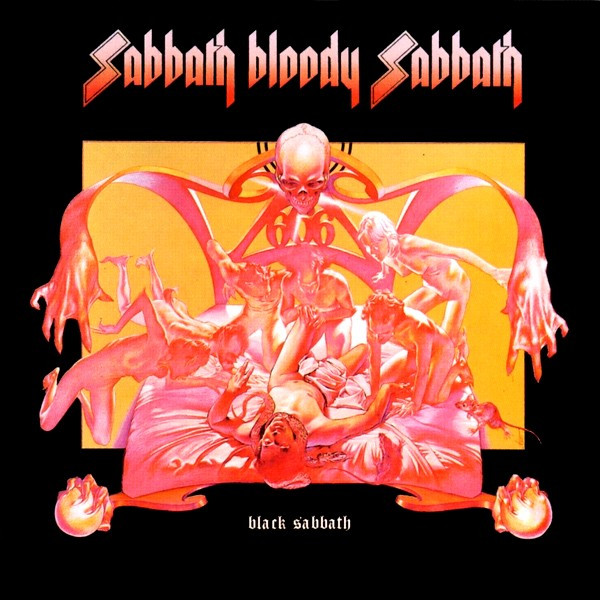
Sabbath, Bloody Sabbath
 View on Discogs
 View on Wikipedia
Album Summary
By 1973, Black Sabbath had been riding hard through the early years of heavy metal, but the sessions for 'Sabbath, Bloody Sabbath' came after a period of creative exhaustion that nearly broke the band apart. They retreated to Clearwell Castle in England, where the gothic surroundings seemed to shake something loose in the soul of the group, and what came pouring out was some of the darkest, most adventurous music of their career. Released on WWA Records in the UK and Warner Bros. in the US, the album was produced by the band themselves alongside Patrick Meehan, and it marked a deliberate expansion of their sound — strings, synthesizers, and a more layered production palette that showed these Birmingham boys were not content to stay in any box anybody tried to put them in.
Reception
- The album was embraced by fans and critics alike as a bold creative step forward, earning widespread praise for pushing the boundaries of heavy music without abandoning the menacing weight the band had built their name on.
- It charted respectably on both sides of the Atlantic, performing well in the UK and making a solid showing in the United States, affirming that Black Sabbath's audience was only growing deeper and more devoted.
- Some critics at the time noted the album's more experimental textures with genuine admiration, recognizing that the band was operating at a peak of artistic confidence.
Significance
- This album stands as one of the defining moments in the evolution of heavy metal, demonstrating that the genre could carry genuine emotional complexity and compositional ambition without losing its primal, bone-rattling power.
- The incorporation of orchestral arrangements and synthesizers into a fundamentally heavy rock framework was a daring move in 1973, and it helped open doors for generations of artists who wanted to expand the sonic vocabulary of hard and heavy music.
- The record captured Black Sabbath at a spiritual and artistic crossroads, channeling themes of darkness, existential dread, and human struggle with a depth that elevated the album beyond genre and into something that felt genuinely profound.
Tracklist
-
A1 Sabbath, Bloody Sabbath —
 5:35
5:35
-
A2 A National Acrobat 71
6:20
-
A3 Fluff 127
4:10
-
A4 Sabbra Cadabra 166
5:55
-
B1 Killing Yourself To Live 128
5:35
-
B2 Who Are You? 109
4:10
-
B3 Looking For Today 130
5:00
-
B4 Spiral Architect 142
4:40

Artist Details
Black Sabbath rose up out of Birmingham, England in 1968 like a storm cloud rolling in over the industrial Midlands, four working-class cats — Ozzy Osbourne, Tony Iommi, Geezer Butler, and Bill Ward — who took the blues, slowed it way down, and wrapped it in something heavy and dark that nobody had ever quite heard before, essentially birthing heavy metal right there in the heart of England. Their ominous guitar riffs, thunderous rhythms, and lyrics drenched in occult imagery made the establishment nervous and the kids absolutely wild, and albums like *Paranoid* and *Master of Reality* became the sacred texts of a whole new generation of musicians who would carry that heavy torch forward for decades. Black Sabbath's influence stretches so deep and so wide that it's nearly impossible to overstate — virtually every hard rock and metal band that came after them owes something to those four brothers from Birmingham who dared to make music that sounded like the world was ending.