Santana
 View on Discogs
Album Summary
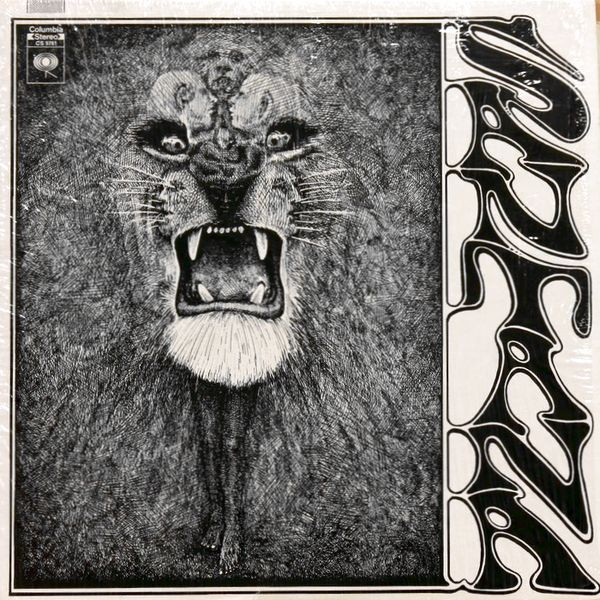
Santana's self-titled debut album came roaring out of San Francisco in 1969 on Columbia Records, produced by David Rubinson and Adrian Barber, and baby, it hit the world like a thunderclap. Carlos Santana and his band — a beautifully dangerous mix of rock guitarwork, blues feeling, and Afro-Cuban fire — had already turned heads on the live circuit, and this record was the document that made it all permanent. Recorded with the kind of spontaneous, groove-driven energy that only a band living and breathing their music can deliver, the album arrived in the wake of their legendary Woodstock appearance and captured that same raw, untamed spirit on wax. It was something nobody had heard before on mainstream radio — Latin percussion locking arms with blues-rock guitar in a way that felt as natural as breathing.
Reception
- The album was a commercial triumph, climbing into the top ten of the Billboard 200 and holding its ground on the charts for an extended run, announcing Santana as one of the most vital new voices in rock music.
- The single 'Evil Ways' broke through to mainstream radio audiences in a big way, giving the band their first major hit and spreading the Latin-rock gospel far beyond the Bay Area faithful.
- Critics were immediate in their praise of the album's bold fusion of Afro-Cuban rhythms and blues-based rock guitar, singling out the extraordinary interplay between Carlos Santana's fluid, singing lead lines and the band's relentlessly hypnotic rhythm section.
Significance
- This album stands as one of the true founding documents of Latin rock, proving with beauty and authority that Afro-Cuban and Latin rhythmic traditions could merge with blues-rooted rock to create something commercially powerful and artistically irreplaceable.
- 'Soul Sacrifice,' the album's magnificent closing track, became one of the most celebrated performances tied to the entire Woodstock generation, locking Santana's name into the history books as one of the most electrifying live acts that era ever produced.
- The percussion-forward architecture of tracks like 'Jingo' helped bring conga and timbale-driven grooves into the consciousness of rock audiences worldwide, planting seeds that would grow and influence countless musicians working at the crossroads of Latin music and rock for decades to come.
Samples
- "Jingo" — one of the most sampled tracks from this album, with its hypnotic Afro-Cuban percussion groove drawing repeated attention from hip-hop and electronic producers across multiple decades.
- "Evil Ways" — sampled and interpolated by various artists drawn to its infectious Latin-rock groove and instantly recognizable melodic character.
- "Soul Sacrifice" — its raw percussive intensity has been tapped by producers seeking hard-driving, live-energy breakdowns rooted in the Woodstock era sound.
Tracklist
-
A1 Waiting 123
 4:07
4:07
-
A2 Evil Ways 117
4:00
-
A3 Shades Of Time 128
3:14
-
A4 Savor 130
2:46
-
A5 Jingo 63
4:23
-
B1 Persuasion 131
2:37
-
B2 Treat 140
4:46
-
B3 You Just Don't Care 113
4:37
-
B4 Soul Sacrifice 136
6:38

Artist Details
Santana is a rock band formed in San Francisco, California in 1966, led by Mexican-American guitarist Carlos Santana, who immigrated from Autlán de Navarro, Mexico. The group pioneered a distinctive sound that fused rock, blues, and jazz with Afro-Cuban and Latin rhythms, creating a genre-blending style that set them apart from virtually every other act of their era. Their legendary performance at the 1969 Woodstock Festival introduced them to a massive worldwide audience, and their debut album released that same year became a commercial and critical success. Santana experienced a major commercial resurgence in 1999 with the album Supernatural, which won nine Grammy Awards including Album of the Year and became one of the best-selling albums in history. Culturally, Santana holds profound significance as a symbol of Latin musical influence in mainstream American rock, helping to bridge cultures and pave the way for broader acceptance of Latin artists in the global music industry.