Santana
 View on Discogs
Album Summary
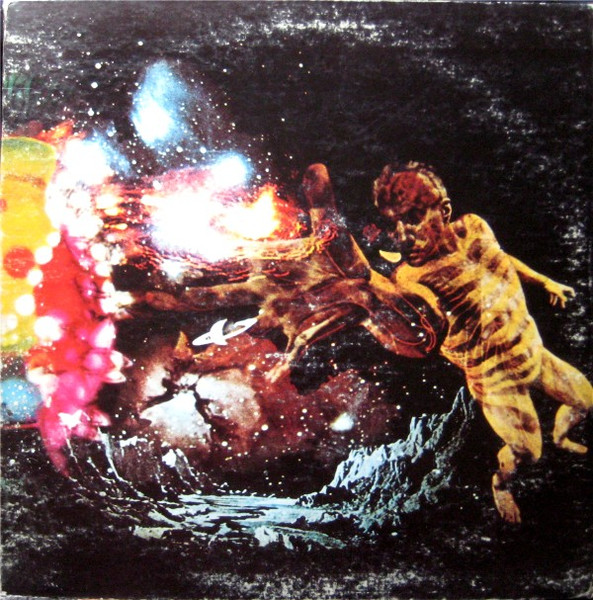
Santana's third studio album, simply titled Santana and released in August 1971 on Columbia Records, found the San Francisco-based Latin rock ensemble riding a wave of creative confidence that only comes when a band truly knows who they are. Produced by the band alongside Brent Dangerfield — a man who understood that sometimes the best thing a producer can do is get out of the way and let greatness breathe — the record captured a group that had already shaken Woodstock to its foundation and wasn't done surprising anyone. These sessions weren't just a follow-up to prior success; they were a declaration. The band wove together Latin percussion, blues-drenched guitar, and increasingly sophisticated arrangements with the kind of organic fluidity that can't be manufactured, only lived.
Reception
- The album climbed to number 2 on the Billboard 200 chart, cementing Santana's standing as one of the most commercially potent acts of the early 1970s.
- Critics greeted the record with genuine enthusiasm, lauding its energetic fusion of Latin rhythms and rock instrumentation and recognizing the band as true innovators in a genre they were actively inventing.
- The album earned platinum certification in the United States, a testament to the kind of deep listener loyalty that goes beyond a hit single and speaks to an entire musical experience.
Significance
- This album stood at the absolute peak of early-1970s Latin rock fusion, proving with every groove and conga strike that Latin percussion and rock architecture weren't just compatible — they were destined for each other.
- In an era when Latin sounds were still considered outside the mainstream American rock conversation, Santana carried the cultural weight of ambassadors, and this record was their most eloquent dispatch from that frontier.
- The album's enduring presence helped transform Latin rock from a novelty into a permanent pillar of popular music, laying groundwork that generations of artists would build upon long after the needle lifted from side B.
Samples
- Everybody's Everything — one of the most recognized and sampled tracks in the Santana catalog, with its infectious groove drawn upon by hip-hop and electronic producers across multiple decades.
- No One To Depend On — sampled by various hip-hop producers seeking its deep Latin-tinged rhythmic foundation, contributing to the track's long second life well beyond its original 1971 release.
Tracklist
-
A1 Batuka 111
 3:35
3:35
-
A2 No One To Depend On 112
5:25
-
A3 Taboo 89
5:40
-
A4 Toussaint L'Overture 136
5:54
-
B1 Everybody's Everything 136
3:30
-
B2 Guajira 126
5:50
-
B3 Jungle Strut 144
5:19
-
B4 Everything's Coming Our Way 132
3:19
-
B5 Para Los Rumberos 152
2:44

Artist Details
Santana is a rock band formed in San Francisco, California in 1966, led by Mexican-American guitarist Carlos Santana, who immigrated from Autlán de Navarro, Mexico. The group pioneered a distinctive sound that fused rock, blues, and jazz with Afro-Cuban and Latin rhythms, creating a genre-blending style that set them apart from virtually every other act of their era. Their legendary performance at the 1969 Woodstock Festival introduced them to a massive worldwide audience, and their debut album released that same year became a commercial and critical success. Santana experienced a major commercial resurgence in 1999 with the album Supernatural, which won nine Grammy Awards including Album of the Year and became one of the best-selling albums in history. Culturally, Santana holds profound significance as a symbol of Latin musical influence in mainstream American rock, helping to bridge cultures and pave the way for broader acceptance of Latin artists in the global music industry.