Just For Love
 View on Discogs
 View on Wikipedia
Album Summary
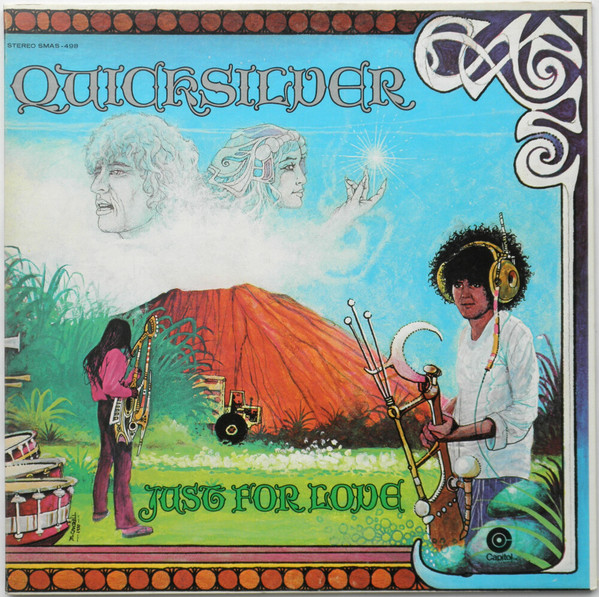
Just For Love, released in 1970 on Capitol Records, stands as one of the most quietly compelling chapters in the Quicksilver Messenger Service story. Recorded during a period of real transition for the band — with the mercurial Dino Valenti now firmly in the fold as a creative force — this record captures a group finding its footing on new ground. Valenti's influence hangs heavy over the sessions, steering the band away from the sprawling, freeform psychedelia that made their name and toward something warmer, more song-structured, and shot through with blues and folk feeling. The production has that loose, organic warmth that only 1970 could give you, and the album's bookending suite — Wolf Run and Just For Love, split across both sides of the vinyl — gives the whole thing an ambitious, almost cinematic architecture that doesn't get talked about nearly enough.
Reception
- The album posted modest numbers on the Billboard 200, falling short of the commercial heights the band had reached with Happy Trails and Shady Grove, reflecting both the changing tastes of the market and the band's deliberate artistic pivot.
- Critical reception at the time was mixed, with some reviewers appreciating the band's willingness to evolve while others mourned the absence of the untamed, guitar-driven energy that had defined their earlier San Francisco sound.
- Fresh Air emerged as the album's most recognizable moment, finding a degree of radio traction that the rest of the record did not, and it remains the track most associated with this era of the band.
Significance
- Just For Love documents Quicksilver Messenger Service at a genuine crossroads — moving away from the pure psychedelic improvisation of the late 1960s and reaching toward a more grounded blues-rock and folk-influenced sound that reflected where rock music was heading as a new decade opened.
- The album's structural ambition — bookending the record with the two-part Wolf Run and Just For Love suites — reveals a band thinking in larger compositional terms, a sign of the seriousness with which they approached this transitional moment even if the wider world wasn't fully listening.
- As a document of the post-psychedelic San Francisco scene in 1970, the album holds real historical value, capturing the moment when the communal idealism of the Haight began to settle into something more personal, more introspective, and more musically grounded.
Tracklist
-
A1 Wolf Run (Part 1) —
 1:10
1:10
-
A2 Just For Love (Part 1) —
2:55
-
A3 Cobra 101
4:20
-
A4 The Hat —
10:30
-
B1 Freeway Flyer 156
3:45
-
B2 Gone Again 175
7:10
-
B3 Fresh Air 115
5:20
-
B4 Just For Love (Part 2) —
1:35
-
B5 Wolf Run (Part 2) —
2:05

Artist Details
Quicksilver Messenger Service was one of the crown jewels of the San Francisco psychedelic rock scene, forming in 1965 right there in the Bay Area alongside fellow travelers like Jefferson Airplane and the Grateful Dead, weaving together blues, folk, and long, exploratory guitar jams that could take a listener on a journey halfway to the cosmos and back. Built around the searing, fluid guitar work of John Cipollina and Gary Duncan, they became a cornerstone of the Haight-Ashbury counterculture movement, with their 1969 album Happy Trails capturing that live, free-flowing spirit better than almost anything else from that era. Though they never quite broke through to the mainstream fame of some of their contemporaries, the true heads always knew that Quicksilver was the real deal — a band that embodied the restless, searching soul of the late sixties like few others could.