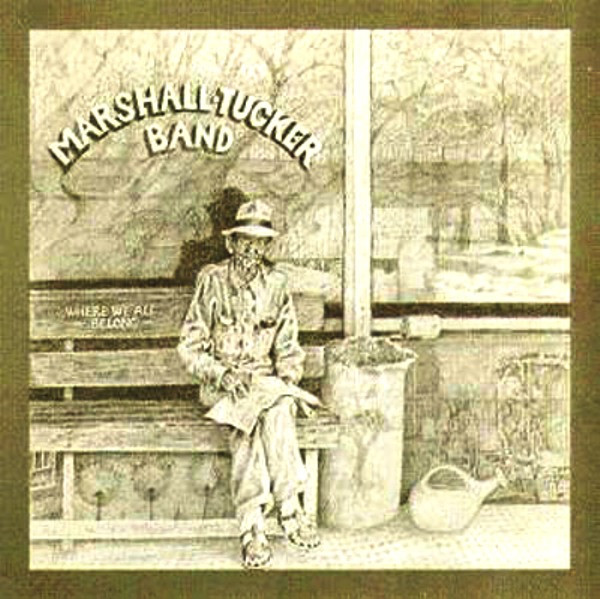
Where We All Belong
 View on Discogs
 View on Wikipedia
Album Summary
Where We All Belong is a double album released by The Marshall Tucker Band in 1974 on Capricorn Records — that legendary Southern label founded by Phil Walden, the same house that was home to the Allman Brothers Band. Produced by Paul Hornsby, who had been riding alongside this band since their earliest days in the studio, this record did something genuinely special: it gave the world two discs, one cut live and one cut in the studio, capturing the Marshall Tucker Band at what was truly a glorious moment in their career. The studio side brought that tight, country-kissed Southern rock the band had been perfecting, while the live disc let them breathe — stretching out, improvising, doing what they did on stages night after night that made crowds absolutely lose their minds. It was a bold structural choice, and it paid off beautifully.
Reception
- The album performed with real commercial muscle, reaching the top 25 on the Billboard 200 — a reflection of the serious momentum this band had built through relentless touring and a devoted, growing fanbase by 1974.
- Critics took notice of the dual studio-live format, with the live disc drawing particular praise for showcasing the band's extraordinary musicianship and their gift for stretching compositions far beyond what the studio versions dared to imagine.
- The record helped lock in the Marshall Tucker Band's standing as one of the most formidable live acts the Southern rock world had ever produced, with many observers noting that their concert performances carried a power and spontaneity that even their finest studio work couldn't fully contain.
Significance
- Where We All Belong stands as a vital document of Southern rock at its early-to-mid 1970s creative and commercial peak, with the Marshall Tucker Band threading together rock, country, jazz, and blues in a way that felt completely natural and completely their own.
- The decision to pair studio recordings with a full live disc was a defining artistic statement — it drew a clear line between this band and their contemporaries, underscoring that the Marshall Tucker Band was as much a live phenomenon as a recording act, and setting a precedent for how Southern rock outfits could present the full dimension of their sound to the world.
- The album further cemented Capricorn Records' cultural authority as the undisputed home of Southern rock, adding another landmark release to a roster that was actively reshaping the landscape of American rock music during this remarkable period.
Tracklist
-
A1 This Ol' Cowboy 109
 6:42
6:42
-
A2 Low Down Ways 80
2:57
-
A3 In My Own Way 143
7:17
-
B1 How Can I Slow Down 116
3:19
-
B2 Where A Country Boy Belongs 85
4:32
-
B3 Now She's Gone 114
4:38
-
B4 Try One More Time 70
4:56
-
C1 Ramblin' 117
5:35
-
C2 24 Hours At A Time 78
13:17
-
D1 Everyday (I Have The Blues) 95
11:30
-
D2 Take The Highway 96
6:56

Artist Details
The Marshall Tucker Band rose up out of Spartanburg, South Carolina in 1972, blending Southern rock with country, jazz, and blues in a way that felt like a long summer highway with the windows rolled down — nobody else was cooking up a sound quite like that. Led by vocalist Doug Gray and featuring the distinctly soulful flute and saxophone work of Jerry Eubanks, they carved out a lane all their own alongside Lynyrd Skynyrd and the Allman Brothers as pillars of the Southern rock movement, scoring big with classics like Can't You See and Heard It in a Love Song. Their significance goes beyond the charts — they helped define a regional pride and a rootsy American spirit that spoke to working folks from the Carolinas to California, leaving a legacy that still runs deep in country and rock to this day.