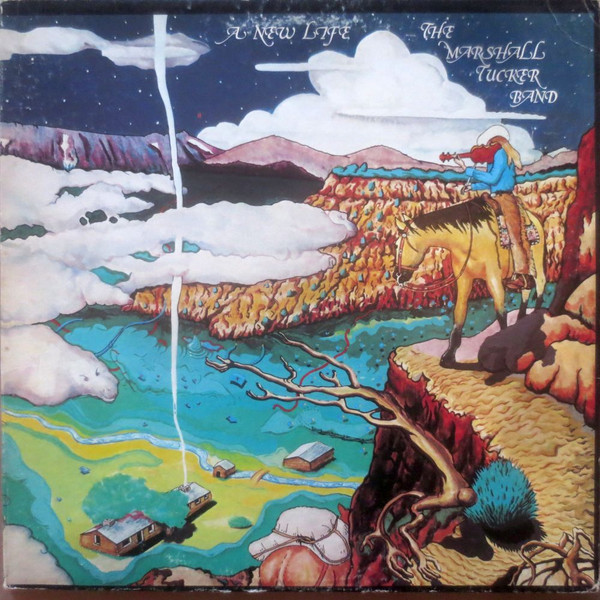
A New Life
 View on Discogs
 View on Wikipedia
Album Summary
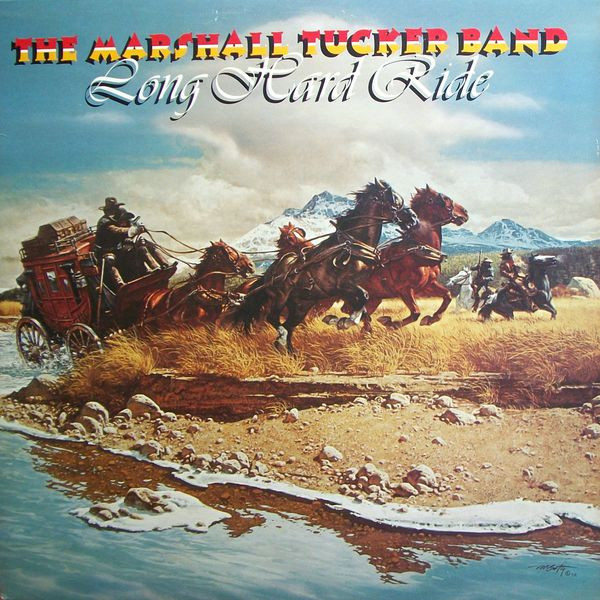
The Marshall Tucker Band came roaring back in 1974 with 'A New Life,' a record that found these Spartanburg, South Carolina brothers digging deeper into the rich Southern soil they'd been cultivating since their debut. Released on Capricorn Records — that legendary Macon, Georgia home of Southern rock royalty — the album was produced by Paul Hornsby, the same steady hand who helped shape the band's signature sound. Recorded with the loose, lived-in energy that only a band constantly road-tested can bring, 'A New Life' captured the Tucker boys at a moment when they were truly hitting their stride, weaving together country, blues, jazz, and rock into something that didn't sound quite like anybody else on the dial.
Reception
- The album performed respectably on the charts, continuing the band's momentum as one of Capricorn Records' marquee acts during the Southern rock boom of the early-to-mid 1970s.
- Critics who were paying attention recognized the album as further proof that The Marshall Tucker Band occupied a uniquely eclectic lane — too jazzy for pure country, too country for pure rock, and too soulful to be pinned down by either camp.
- The album helped cement the band's reputation as a formidable live-and-studio act, reinforcing their growing fanbase across the American South and beyond.
Significance
- 'A New Life' stands as a testament to the Southern rock movement's most ambitious creative moment, showcasing how The Marshall Tucker Band consistently pushed the genre past its boundaries with flute-laced arrangements, jazz-informed chord progressions, and deeply felt country soul — all heard in tracks like 'Blue Ridge Mountain Sky' and 'Fly Eagle Fly.'
- The album reflects the spiritual and philosophical restlessness running through Southern music in the early 1970s, with tracks like the title cut 'A New Life' and 'Fly Eagle Fly' reaching for something transcendent beyond the typical rock and roll subject matter of the era.
- As a Capricorn Records release, 'A New Life' is a key document in the story of how a small Southern independent label briefly became one of the most culturally significant imprints in American music, helping to define a regional sound that would influence country, rock, and Americana for decades to come.
Tracklist
-
A1 A New Life 159
 6:36
6:36
-
A2 Southern Woman 72
7:43
-
A3 Blue Ridge Mountain Sky 165
3:30
-
A4 Too Stubborn 183
3:47
-
B1 Another Cruel Love 168
3:55
-
B2 You Ain't Foolin' Me 159
7:00
-
B3 24 Hours At A Time 78
5:00
-
B4 Fly Eagle Fly 138
4:15

Artist Details
The Marshall Tucker Band rose up out of Spartanburg, South Carolina in 1972, blending Southern rock with country, jazz, and blues in a way that felt like a long summer highway with the windows rolled down — nobody else was cooking up a sound quite like that. Led by vocalist Doug Gray and featuring the distinctly soulful flute and saxophone work of Jerry Eubanks, they carved out a lane all their own alongside Lynyrd Skynyrd and the Allman Brothers as pillars of the Southern rock movement, scoring big with classics like Can't You See and Heard It in a Love Song. Their significance goes beyond the charts — they helped define a regional pride and a rootsy American spirit that spoke to working folks from the Carolinas to California, leaving a legacy that still runs deep in country and rock to this day.