Morning Star
 View on Discogs
 View on Wikipedia
Album Summary
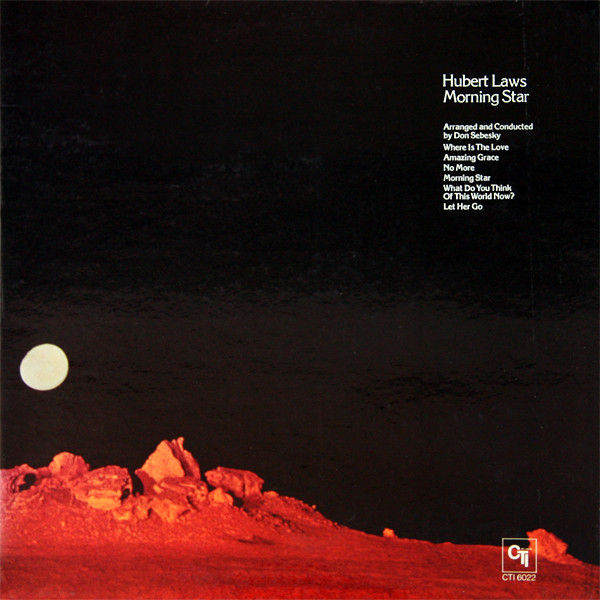
Morning Star, released in 1972 on CTI Records, stands as one of the most luminous moments in Hubert Laws' storied career. Produced by the legendary Creed Taylor — the man who had a golden ear for bringing jazz into full orchestral bloom — this album captured Laws at the very height of his powers, his flute singing with a purity and fire that few instruments in any genre could match at that time. Recorded with the lush, high-fidelity production aesthetic that CTI had become famous for, Morning Star placed Laws' virtuosic flute front and center, surrounded by richly textured ensemble arrangements that breathed jazz fusion, classical influence, and soulful feeling all at once. This was not background music — this was a statement, and 1972 was ready to hear it.
Reception
- The album was warmly embraced by jazz audiences and critics alike, further cementing Laws' standing as the most gifted and adventurous flautist working in jazz at the time.
- Morning Star reinforced CTI Records' reputation for producing jazz recordings of exceptional sonic quality and artistic ambition during the early 1970s.
Significance
- Morning Star stands as a defining document of the jazz fusion era, demonstrating how the flute — an instrument too often pushed to the margins — could carry an entire album with grace, authority, and raw emotion.
- The album's seamless blend of modal jazz sensibility, orchestral arrangement, and soulful phrasing reflects the rich cultural cross-pollination happening in Black music during the early 1970s, a moment when genre walls were beautifully crumbling.
- Through performances like 'Amazing Grace' and 'Where Is The Love,' Laws showed that jazz could hold sacred and popular melody without losing one ounce of its integrity or improvisational soul.
Tracklist
-
A1 Morning Star 131
 7:54
7:54
-
A2 Let Her Go —
4:50
-
A3 Where Is The Love —
4:34
-
B1 No More 115
5:00
-
B2 Amazing Grace —
7:20
-
B3 What Do You Think Of This World Now? —
6:00

Artist Details
Hubert Laws is one of the most gifted flutists to ever grace this earth, a Houston-born Texas treasure who came up through the jazz world in the 1950s and 60s before carving out a stunning career that blended jazz, classical, R&B, and pop into something so refined and soulful it made you close your eyes and just *breathe*. His work throughout the 1970s — records like *Morning Star* and his stunning interpretations of classical pieces rearranged for the modern ear — put the flute on the map as a serious lead instrument in jazz and crossover music, earning him deep respect from cats like Quincy Jones, who featured him on countless sessions. Laws is a giant in the truest sense, a musician whose artistry bridged the worlds of Carnegie Hall and the soul charts, proving that beauty and brilliance don't have to live in separate rooms.