
In The Beginning
 View on Discogs
Album Summary
Hubert Laws brought something deeply spiritual and musically daring to the table with 'In The Beginning,' released in 1974 on CTI Records — that legendary New York label that was doing things nobody else was doing at the time. Produced by the masterful Creed Taylor, whose ear for lush, sophisticated arrangements was second to none, this album found Laws at a profound creative crossroads, weaving together sacred themes, jazz standards, and classical influences into one seamless, transcendent listening experience. Recorded with the kind of care and attention that CTI was known for, the album carried that signature big-room sound — warm, wide, and absolutely alive — with Laws's flute floating above orchestral arrangements that felt like they were reaching for something higher than the charts.
Reception
- The album was embraced by jazz purists and crossover listeners alike, fitting naturally into the early-to-mid 1970s wave of jazz-classical fusion that was finding a broader, more spiritually curious audience.
- CTI's reputation for audiophile-quality production helped 'In The Beginning' gain strong visibility in jazz circles, where Laws was already regarded as one of the most technically gifted flutists in the game.
- Critical reception recognized the album's ambitious scope — blending Erik Satie's 'Gymnopedie #1' alongside John Coltrane's 'Airegin' and 'Moment's Notice' signaled a fearless artistic vision that reviewers found both refreshing and reverent.
Significance
- The album stands as a bold statement about the flute's place at the center of serious jazz expression, with Laws treating sacred hymns like 'Come Ye Disconsolate' and originals like the title track with equal depth and soulfulness, expanding what the instrument could mean in a jazz context.
- By placing Erik Satie's classical 'Gymnopedie #1' alongside hard bop landmarks like Coltrane's 'Airegin' and 'Moment's Notice,' Laws helped legitimize the jazz-classical crossover movement at a time when that kind of genre bridge-building was still considered a bold and risky artistic move.
- The spiritual undercurrent running through the album — from its Genesis-referencing title to its hymnal selections — positioned it as part of a broader 1970s jazz movement that was seeking meaning and transcendence in music, reflecting the cultural and philosophical searching of that entire era.
Tracklist
-
A1 In The Beginning 76
 6:52
6:52
-
A2 Restoration 135
8:57
-
B1 Gymnopedie #1 65
3:58
-
B2 Come Ye Disconsolate 111
5:19
-
B3 Airegin 148
5:29
-
C1 Moment's Notice 142
6:54
-
C2 Reconciliation 121
10:06
-
D Mean Lene 127
15:35

Artist Details
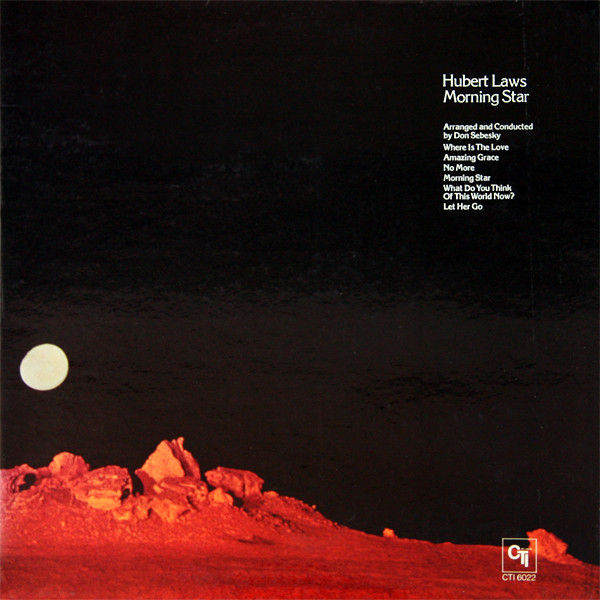
Hubert Laws is one of the most gifted flutists to ever grace this earth, a Houston-born Texas treasure who came up through the jazz world in the 1950s and 60s before carving out a stunning career that blended jazz, classical, R&B, and pop into something so refined and soulful it made you close your eyes and just *breathe*. His work throughout the 1970s — records like *Morning Star* and his stunning interpretations of classical pieces rearranged for the modern ear — put the flute on the map as a serious lead instrument in jazz and crossover music, earning him deep respect from cats like Quincy Jones, who featured him on countless sessions. Laws is a giant in the truest sense, a musician whose artistry bridged the worlds of Carnegie Hall and the soul charts, proving that beauty and brilliance don't have to live in separate rooms.