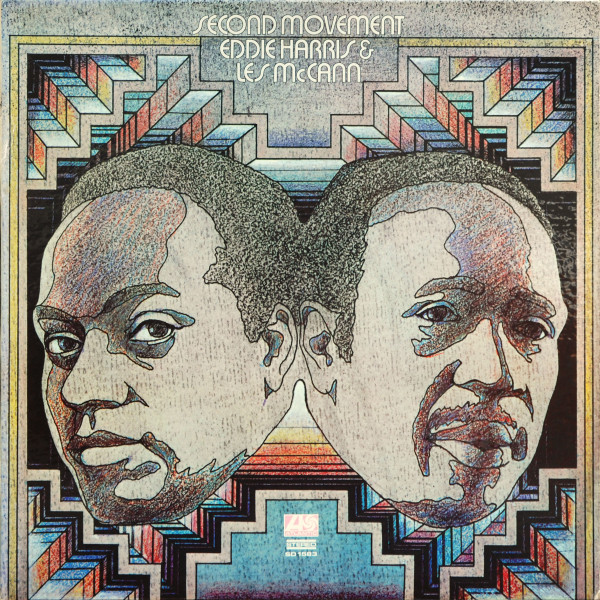
Second Movement
 View on Discogs
 View on Wikipedia
Album Summary
Second Movement came into the world in 1971 on the Atlantic-distributed Vortex label, arriving at a moment when Eddie Harris was deep in his groove as one of the most restlessly creative voices in all of jazz. This was a brother who wasn't content to stay in one lane — Harris brought his tenor saxophone and his beloved electric saxophone to the studio and crafted an album that sat right at the crossroads of soul-jazz, funk, and modal exploration. Recorded during a fertile stretch of experimentation when Harris was pushing amplified instrumentation further than almost anyone else dared, Second Movement stands as a document of a true innovator operating at full creative velocity, channeling the spirit of the streets and the sophistication of the bandstand into one seamless, soulful statement.
Reception
- Second Movement maintained Harris's steady presence in the early 1970s jazz market, resonating with audiences who had come to trust him as a bandleader of both commercial instinct and artistic integrity.
- The album appealed across generational lines, drawing in traditional jazz listeners alongside the younger crowd that was hungry for the electric, funk-inflected sounds reshaping the genre during this era.
Significance
- Second Movement places Eddie Harris squarely at the vanguard of the electric saxophone movement, demonstrating with authority that amplified jazz could carry just as much soul and harmonic depth as anything coming out of the acoustic tradition.
- Tracks like 'Universal Prisoner' and 'Set Us Free' reflect the social consciousness simmering through Black American music in the early 1970s, with Harris embedding weighty themes into arrangements that swung hard and grooved deep.
- The album is a masterclass in genre synthesis — Harris moves fluidly between funk rhythms, soul-jazz warmth, and modal complexity across its five tracks, proving that these worlds were never as separate as critics liked to pretend.
Tracklist
-
A1 Shorty Rides Again 122
 8:29
8:29
-
A2 Universal Prisoner 118
4:58
-
A3 Carry On Brother 122
7:09
-
B1 Set Us Free —
10:28
-
B2 Samia —
7:31

Artist Details
Eddie Harris was a Chicago-born jazz saxophone genius who came up in the late 1950s and early '60s, blending hard bop with soul, funk, and electric experimentation in a way that made the purists nervous and the people on the dance floor absolutely electric — his 1961 recording of "Exodus" became one of the best-selling jazz singles of all time, and he never looked back from there. His fearless willingness to plug in, funk it up, and cross genre lines laid serious groundwork for jazz-fusion and soul-jazz, making him a pioneer that cats like Herbie Hancock and Miles Davis certainly took notice of. Harris was the kind of artist who didn't fit neatly into any box, and that restless creative spirit — captured on landmark albums like *Eddie Harris/Les McCann: Swiss Movement* — cemented his place as one of the most innovative and soulful voices in American music history.